

How Smoking Affects Your Skin: The Hidden Damage
When we think about the dangers of smoking, it’s usually lungs, heart disease, or cancer that come to mind. Fair enough — those are serious.
But here’s what most people overlook: smoking affects your skin, too — and not in a small way.
Each puff quietly robs your skin of oxygen and nutrients, leaving it dull, tired, and aging faster than it should. Fine lines deepen, breakouts linger, and that healthy glow?
It slowly fades away.
At first, it’s subtle — maybe your skin just looks a little less fresh. But over time, the damage becomes impossible to ignore.
In this article, we’ll explore exactly how smoking affects your skin, what happens when you quit, and how my own complexion changed once I finally let cigarettes go (spoiler: it was worth it).
Let’s dive in!
This post contains affiliate links, which means we may earn a commission if you purchase through our links—at no extra cost to you. As an Amazon Associate we earn from qualifying purchases. We only recommend products we use or trust. Learn more about affiliate marketing or read our full disclosure.
The Science Behind Skin Damage
Your skin isn’t just a surface — it’s a living, breathing organ that works hard to protect you every single day.
To stay healthy, smooth, and resilient, it needs a steady flow of oxygen and nutrients from your bloodstream.
Found this helpful? Pin it for later so you can come back anytime.

But here’s the problem: when you smoke, you flood your body with over 7,000 chemicals — including nicotine, carbon monoxide, and a toxic mix that interferes with that vital supply.
And that’s where the real damage begins.
What’s Really in a Cigarette?
Cigarettes contain around 600 ingredients, and when burned, they create thousands of harmful byproducts.
At least 69 of these are known to cause cancer, and many are the same toxins found in industrial materials and everyday poisons.
To put it in perspective, tobacco smoke contains chemicals you’d never want near your body, let alone inside it:
- Acetone — found in nail polish remover
- Arsenic — used in rat poison
- Benzene — found in gasoline
- Cadmium — used in battery acid
- Carbon monoxide — the same gas found in car exhaust
- Tar — the sticky substance used to pave roads
Each puff sends these chemicals coursing through your bloodstream — and yes, they reach your skin, too.
That’s one major reason smoking affects skin health from the inside out.
How Smoking Damages Your Skin
The toxic compounds in cigarettes interfere with your skin’s natural repair system and cut off the oxygen it needs to thrive.
Think of it this way: every cigarette you smoke narrows your blood vessels, making it harder for nutrients to reach your skin. Over time, that lack of nourishment leads to dullness, wrinkles, and slower healing.
In short, this is how smoking affects your skin at its deepest level — from the inside out.
Let’s look at what’s really happening beneath the surface when you smoke:
1. Your Skin Can’t Breathe or Heal Properly
Every time you take a drag, nicotine causes your blood vessels to tighten — a process called vasoconstriction. When that happens, less blood (and therefore less oxygen) reaches your skin.
It’s like turning down the pressure on a garden hose — your skin simply isn’t getting the nourishment it needs.
With reduced circulation, fewer essential nutrients — including vitamin A and vitamin C — make it to the surface. These vitamins are crucial for collagen production and skin repair, the very things that keep your complexion firm, bright, and healthy.
Without enough of them, your skin starts to lose its natural glow.
Over time, that lack of oxygen and nutrients leads to a dull, tired, even grayish tone — the telltale “smoker’s complexion.” It’s one of the earliest visible signs of how smoking affects your skin, even before deeper wrinkles start to appear.
RELATED POST: The 8 Amazing Benefits of Vitamin C for Your Skin
What the research says
Interestingly, scientists have seen this same effect elsewhere in the body.
Studies on intervertebral discs — the cushions between your spine’s vertebrae — show that nicotine reduces blood flow and nutrient exchange there, too.
The result?
Tissue degeneration and slower healing.
In other words, the same process that weakens your skin’s structure can also affect your spine, joints, and other connective tissues.
2. Your Skin Ages Faster from the Inside
Here’s where things get a bit more technical — but also more revealing.
Cigarette smoke is packed with free radicals — unstable little molecules that wreak havoc on your cells through a process called oxidative stress.
In simple terms, free radicals are like tiny bullies attacking your skin’s support system. They damage your cell membranes, DNA, and vital proteins like collagen and elastin — the very fibers that keep your skin firm, smooth, and elastic.
When those structures start breaking down, it shows up right on your face: fine lines, sagging, and that rough, leathery texture that can make skin look years older than it really is.
What the research says
A meta-analysis of 15 studies (2005–2023) found that smoking significantly accelerates visible skin aging, leading to:
- Deeper wrinkles
- Looser skin
- Reduced skin quality
It also revealed stronger links between smoking and chronic skin conditions such as psoriasis, acne, eczema, and even certain skin cancers like squamous and basal cell carcinoma.
Researchers identified oxidative damage, hypoxia, and collagen breakdown as the main culprits — all driven by those same free radicals in cigarette smoke.
The encouraging part?
The same review showed that quitting smoking can slow — and even partially reverse — many of these changes over time.
So while smoking affects skin in profound ways, your body also has an incredible ability to repair itself once the habit stops.
RELATED POST: 6 Ways Free Radicals Damage Your Skin and How to Protect It
3. Your Skin Loses Its Bounce and Firmness
One of your skin’s biggest jobs is to protect you from the environment — especially sun exposure.
We already know that chronic UV radiation damages collagen and elastin, leading to photoaging.
But what many people don’t realize is that smoking can have a similar — and sometimes even deeper — effect on your skin’s structure.
RELATED POST: 4 Easy Ways to Boost Collagen Naturally for Youthful Skin
What the research says
Studies show that smoking is an independent risk factor for facial wrinkles, even when sun exposure is taken into account.
Smokers tend to develop wrinkles that are narrower, deeper, and more sharply defined, especially around the eyes and mouth.
Part of this comes from repetitive movements like pursing the lips or squinting — but the real issue lies deeper, in the skin’s elastic fibers.
These fibers are made up of elastin, which gives your skin its stretch, and microfibrils, which provide strength and structure. Smoking disrupts both — fragmenting the fibers and triggering enzymes (called MMPs) that break them down even further.
Over time, your skin loses its ability to bounce back. It becomes looser, more wrinkled, and less resilient — even in areas that rarely see the sun.
Why Smoking Shows Up on Your Face First
By now, we know how smoking affects skin — cutting off oxygen, breaking down collagen, and flooding your cells with free radicals.
But here’s the thing: the damage doesn’t spread evenly. It shows up first — and most noticeably — on your face.
That’s because facial skin is thinner, more expressive, and constantly exposed to the elements. Every cigarette compounds tiny bits of damage — until they start showing up in the mirror.
Dermatologists even have a name for it: “smoker’s face.”
1. Lines and Wrinkles That Set In Too Soon
One of the earliest giveaways is fine lines, especially around your eyes and mouth.
These aren’t your typical signs of aging — they form from constant muscle movement (like pursing your lips or squinting through smoke) layered on top of weakened collagen and reduced elasticity beneath the surface.
Over time, those faint creases deepen into the classic “smoker’s lines.”
Even in your 30s, you might notice skin that looks older than it feels — less elastic, less forgiving, and harder to smooth out.
RELATED POST: What Are the Main Causes of Skin Aging And How to Reverse Them
2. Hollow or Gaunt Features
Have you ever noticed how long-term smokers often develop a leaner, more hollow look around the cheeks and under the eyes?
That’s volume loss — another clear sign of how smoking affects your skin.
Smoking speeds up the breakdown of fat and collagen in the mid-face, leading to sagging skin, sharper cheekbones, and deeper folds around the mouth and jawline.
The result is a prematurely aged, slightly sunken appearance that’s hard to disguise with makeup or skincare.
And there’s solid science behind it.
One study comparing smokers to non-smokers found that smokers produced up to 22% less collagen — the key protein that keeps your skin firm and full. Even more striking, they had twice the amount of enzymes that break collagen down.
So while your skin is struggling to make new collagen, it’s also destroying what little remains — a double hit that gradually erodes the structure and fullness of your face.
Over time, this leads to that unmistakable “smoker’s face” — thinner, looser, and less resilient, even if the rest of your lifestyle is healthy.
RELATED POST: 10 External Factors That Cause Skin Aging and How to Slow It Down
3. Dull, Grayish Skin
Healthy skin glows because it’s rich in oxygen and nutrients.
But smoking affects your skin by quietly stripping both away. When blood vessels constrict, less oxygen reaches the surface — and that’s what creates the unmistakable gray or yellowish tone often called “tobacco skin.”
It’s more than dullness; it’s fatigue written on your face. Without enough oxygen, skin cells can’t renew as quickly, leaving your complexion looking tired, flat, and lifeless — even after a good night’s sleep.
Nicotine also stains the skin and dehydrates its outer layers, compounding that washed-out look over time.
The result?
Skin that not only looks older but feels less vibrant — proof that your glow truly starts from within.
RELATED POST: How to Get Glowing Skin the Natural Way: A Step-by-Step Guide
4. Uneven or Blotchy Tone
Smoking doesn’t just dull your skin — it can actually alter its color. Over time, some areas may appear reddish, purple, or even slightly orange, giving your complexion a patchy, uneven look.
Research shows that tobacco smoke can stimulate pigment-producing cells (melanocytes) to make more melanin — the pigment that gives your skin its color.
In simple terms, smoke exposure can “switch on” these cells, causing certain spots to become darker than others.
That’s why many smokers notice uneven tone or discoloration, especially around the mouth and cheeks. It’s another subtle but visible sign of how smoking affects your skin — reaching all the way down to the cellular level.
5. Rough, Dehydrated Texture
Healthy skin isn’t just about color — texture matters, too.
Smoking affects your skin by weakening its natural barrier, making it harder to retain moisture. The outer layer becomes rough, flaky, and uneven — what dermatologists sometimes call “leathery.”
And no, even the fanciest moisturizer can’t fully fix it. The real issue lies deeper: smoking alters the proteins and lipids that help your skin stay hydrated.
Studies show that long-term smokers experience subtle shifts in these building blocks, along with oxidative stress, making it difficult for skin to stay soft and smooth. Your body tries to compensate, but it often isn’t enough — especially in areas that see the most smoke exposure.
Over time, that dryness doesn’t just feel uncomfortable; it amplifies every fine line, making your skin look older than it really is.
RELATED POST: Why Drinking Water is So Important a for Healthy Skin
6. Enlarged Pores and Breakouts
Smoking doesn’t just dry out your skin — it can make it more prone to breakouts, too. The toxins in cigarette smoke irritate your skin, triggering inflammation and oxidative stress.
This isn’t just surface-level: research shows that smokers often have changes in their gut microbiota and higher systemic inflammatory markers, which can make skin more reactive and sensitive.
On top of that, smoking may increase sebum production, which clogs pores and sets the stage for acne, blackheads, and enlarged pores.
Over time, these effects leave your complexion rougher, more uneven, and harder to manage — another clear way smoking affects skin from the inside out.
RELATED POST: The Powerful Role of Zinc for Clear Skin
Smoking Slows Your Skin’s Recovery
Smoking doesn’t just change how your skin looks — it slows how it heals, too.
Nicotine narrows your blood vessels, reducing circulation and making it harder for oxygen and nutrients to reach damaged tissue.
Let’s break down what this means:
1. Delayed Wound Healing
When blood flow is restricted, fewer white blood cells reach the site of a wound, slowing your body’s natural immune response.
That’s why smokers often notice slower healing after surgeries, cuts, or burns.
Delayed recovery doesn’t just take longer — it also increases the risk of complications like infections or tissue damage.
Found this helpful? Pin it for later so you can come back anytime.

2. Surgical and Dermatological Implications
Considering cosmetic procedures?
Here’s something important to keep in mind: smoking can seriously affect your results.
Plastic surgeons often ask patients to quit before facelifts, skin grafts, or other procedures because smokers have a much higher risk of poor healing and complications.
WHO research shows that quitting at least four weeks before surgery can make a big difference. The longer you stay tobacco-free, the better your outcomes — fewer infections, faster healing, and smoother results from treatments like chemical peels or laser therapy.
Quitting smoking isn’t just good for your long-term health — it gives your skin the best chance to bounce back and look its best.
RELATED POST: Eternal Youth with Botox? Here’s Why It’s Impossible
How Smoking Affects Skin Conditions
Wrinkles and dullness are just the beginning. Research shows that smoking is linked to several chronic skin disorders — some uncomfortable, others potentially serious.
Let’s take a closer look at what these conditions are:
1. Psoriasis
Smokers are about 2.5 times more likely to develop moderate to severe psoriasis than non-smokers, according to a large Danish study of over 100,000 adults.
Researchers found that while smoking may not directly cause psoriasis, it clearly worsens inflammation and flare-ups.
Nicotine and other toxins trigger oxidative stress and increase inflammatory cytokines — the same molecules behind psoriasis symptoms. Smoking can even influence certain genes tied to the condition, making it harder to manage.
In short: even if smoking isn’t the root cause, it makes psoriasis more severe and slower to heal — another way smoking undermines your skin’s health from within.
2. Hidradenitis Suppurativa
Hidradenitis suppurativa (HS) is a painful skin condition that causes recurring abscesses and scarring, often in areas like the underarms and groin.
Studies show that people with HS are often current or former smokers, and smoking is one of the strongest risk factors linked to flare-ups.
Nicotine promotes clogged hair follicles and fuels chronic inflammation, making HS harder to manage.
A large Korean cohort study of over 6 million adults found that people who quit smoking had a 30–40% lower risk of developing HS compared to those who continued. Even better, after three to four years smoke-free, their risk dropped to nearly the same as never-smokers.
It’s a clear reminder that quitting doesn’t just stop new damage — it helps your skin recover from old inflammation too.
3. Skin Cancer
Smoking doesn’t just age your skin — it can also affect your risk and outcomes with skin cancer, particularly squamous cell carcinoma (SCC).
The carcinogens in cigarette smoke damage your DNA, and when combined with sun exposure, they can make your skin more vulnerable.
Research using The Cancer Genome Atlas (TCGA) found that people who quit smoking had a much better prognosis than those who kept smoking across several SCC types, including head and neck, cervical, and lung cancers.
But here’s the good news: Quitting gives your body a real chance to recover, improving both your skin’s health and, if cancer ever develops, your odds of better outcomes.
How Smoking Impacts Your Hair
Smoking doesn’t just affect your face — it takes a toll on your hair too.
Reduced blood flow to the scalp means hair follicles get fewer nutrients, leaving strands weaker, thinner, and more prone to shedding.
On top of that, smoking produces oxidative stress, which can damage the pigment-producing cells in your follicles.
The result?
Premature graying and faster hair thinning.
A cross-sectional study of over 200 participants found that smokers were 2.5 times more likely to develop gray hair before the age of 30 compared to non-smokers. They also started graying earlier, supporting the idea that smoking accelerates aging even in your hair.
It’s another way smoking affects your skin and its extensions, showing that the impact isn’t limited to just your face.
RELATED POST: How to Get Thicker, Healthier Hair (Even If It Feels Like You’re Losing It)
Smoking and Sun: A Toxic Duo for Your Skin
Smoking is harmful on its own, and so is sun exposure — but when you combine the two, the effects are far worse than either alone.
Both cigarette smoke and UV rays generate free radicals that break down collagen and elastin, the proteins that keep your skin firm, smooth, and elastic. And the damage doesn’t just add up — it multiplies.
A recent lab study using engineered skin models found that chronic exposure to cigarette smoke and simulated sunlight together caused:
- More collagen breakdown
- Less collagen in the skin
- Increased inflammation
- Slower skin repair
In short, smoke plus sun creates a perfect storm for accelerated aging, wrinkles, and uneven skin tone — much worse than either factor alone.
RELATED POST: 6 Ways to Protect Your Skin From Sun Damage
How Your Skin Recovers After Quitting
Your skin is surprisingly resilient — and quitting smoking gives it a real chance to heal.
Some damage, like deep wrinkles or long-standing pigmentation, might not disappear completely, but many visible improvements can happen sooner than you think.
1. Circulation Gets a Boost
One of the first things you’ll notice after quitting is better blood flow.
Studies show that once you stop smoking, your arteries start relaxing, making it easier for oxygen and nutrients to reach your skin.
The result?
A brighter, healthier-looking complexion that starts to glow — sometimes within just a few weeks.
2. Collagen Starts to Recover
Your skin slowly begins rebuilding collagen and elastin — the proteins that keep it firm and bouncy.
Even a few weeks after quitting, research shows your body ramps up collagen activity and antioxidant levels, helping fight off the free radicals that caused damage in the first place.
Over months, this can lead to skin that feels stronger, firmer, and more resilient.
RELATED POST: What Are Antioxidants 5 Skincare Benefits You Need to Know
3. Skin Feels Smoother and More Hydrated
As circulation improves and your skin holds onto moisture better, dryness and rough texture start to fade.
In a pilot study following women for nine months after quitting, skin became noticeably smoother, brighter, and more elastic.
The researchers even measured a drop of about 13 years in the skin’s “biological age” on average! Fine lines softened, pores appeared smaller, and overall texture improved.
4. Healing Speeds Up
Without nicotine and other toxins slowing things down, your skin can repair itself faster.
Cuts, scrapes, and acne lesions heal more quickly, inflammation decreases, and your risk of infection drops.
This is another way your skin shows it’s bouncing back from years of smoking.
5. Complexion brightens
Skin tones also improve over time. The same pilot study found that yellow or grayish hues faded as circulation and oxygenation improved, leaving a fresher, more even complexion.
Stains on nails and lips can diminish too, giving an overall healthier appearance.
Supporting Skin Recovery After Quitting
Quitting smoking gives your skin a fresh start, but you can speed up the recovery process by adopting a few supportive habits.
1. Nutrition for Skin Repair
Eating the right foods can make a big difference. Focus on vitamin C, vitamin E, zinc, and antioxidants — found in berries, leafy greens, nuts, and citrus fruits.
These nutrients help repair collagen, fight free radicals, and support overall skin health, giving your complexion the best chance to bounce back.
RELATED POST: 7 Collagen Peptides Benefits: What You Need to Know for Better Health and Beauty
2. Hydration
Keeping your skin hydrated is key to recovery. Drinking plenty of water helps flush out lingering toxins and nourishes your skin from the inside out.
On the outside, a good moisturizer — ideally with ingredients like hyaluronic acid or ceramides — helps strengthen the skin barrier, lock in moisture, and restore softness and smoothness.
Together, these steps support your skin as it heals after quitting.
3. Sun Protection
Even after quitting, your skin still needs protection from the sun.
Wearing broad-spectrum sunscreen every day shields your skin from harmful UV rays, which can accelerate aging and increase the risk of skin cancer.
Your newly healing skin is especially vulnerable to environmental stressors, so daily sun protection is a simple but powerful way to help it recover and stay healthy.
4. Gentle Skincare Routine
As your skin heals, it’s important to treat it with care. Avoid harsh scrubs or irritating chemicals that can strip your skin of moisture and slow recovery.
Instead, stick to mild cleansers and consider antioxidant serums with ingredients like vitamin C or niacinamide.
These help brighten your complexion, strengthen your skin barrier, and combat free radical damage, giving your recovering skin the support it needs.
5. Beauty Tools to Support Healing
While quitting smoking and supporting your skin with nutrition, hydration, sunscreen, and gentle skincare go a long way, some people like to give their skin an extra boost with at-home beauty tools.
One of my personal favorites is the CurrentBody LED Mask. I’ve been using it myself, and I love how it helps stimulate collagen, improve skin texture, and reduce the appearance of fine lines.

CurrentBody Skin LED Face Mask: Series 2 | FDA-Approved | At-Home Near-Infrared & Red Light Therapy Mask | Anti-Aging | Wrinkle Reduction
Use code COURIERCB at checkout to save 10%.
For anyone in the early stages of skin recovery after quitting smoking, this kind of treatment can complement your routine and help your skin look and feel healthier faster.
Of course, tools like this work best alongside the basics — quitting smoking, eating well, protecting your skin, and keeping it hydrated — but they can be an effective way to give your skin a little extra support.
RELATED POST: The Truth About the CurrentBody LED Mask After 8 Weeks of Use
How I Quit Smoking for Good
Your skin isn’t just about looks — it can affect confidence and self-esteem in a big way. Many smokers notice premature wrinkles, dullness, or uneven tone and feel motivated to quit once they see the changes in the mirror.
I know this firsthand. It was the signs of aging on my own face that pushed me to finally quit smoking.
So, how did I do it?
I read Allen Carr’s book Easy Way to Stop Smoking (available on Bookshop.org) and it completely changed my life. His method doesn’t rely on scare tactics or willpower (those things never work).
Instead, it helps you rethink smoking, making it surprisingly easy to let go of the habit.
If you’ve struggled to quit like I did, I can’t recommend this book enough — it’s the approach that finally worked for me.
book tip
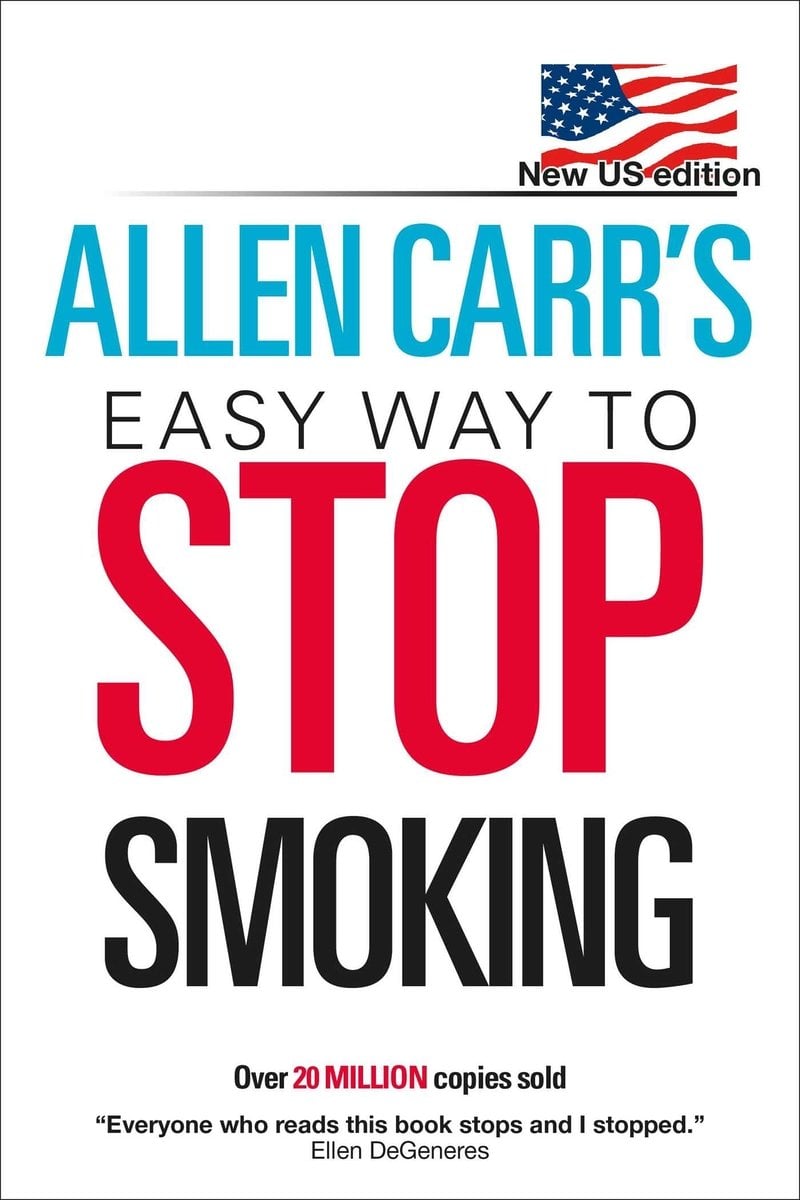
Easy Way to Stop Smoking
By Allen Carr
Looking to quit smoking? Then this book is a must-read!
Did you know? When you buy from Bookshop.org, you help support independent bookstores.
Your Skin Tells a Story About Your Health
Your skin is more than just your appearance — it’s a mirror of your internal wellbeing.
The same processes that damage your skin, like oxidative stress, inflammation, and reduced circulation, also affect your heart, lungs, and other vital organs.
In many ways, noticing changes in your skin can be an early warning sign that your body needs care.
Quitting smoking isn’t just a cosmetic choice. It’s a profound health decision that can extend your life, lower the risk of chronic disease, and boost overall vitality.
Every wrinkle reduced, every improvement in tone and texture, is a visible reflection of the healing happening inside your body.
Final Thoughts
The effects of smoking on your skin go far deeper than the surface.
Every puff constricts blood vessels, depletes oxygen, breaks down collagen, and floods your body with harmful free radicals.
The result is a complexion that ages faster, heals more slowly, and becomes more vulnerable to disease.
But the story doesn’t end there. Your skin — and your body — are remarkably resilient. Quitting smoking can help restore color, elasticity, and vitality, often within weeks or months.
The sooner you stop, the greater the potential for reversal.
While anti-aging creams and cosmetic procedures promise youthful skin, the most effective beauty secret is simple: don’t smoke.
By quitting today, you give your skin — and your entire body — the chance to breathe, heal, and glow again.
*This article is for informational purposes only and should not be considered medical or dermatological advice. Always consult with a dermatologist or qualified skincare professional for personalized recommendations tailored to your skin type and concerns.
Chen, Chang et al. “A Novel Signature for Predicting Prognosis of Smoking-Related Squamous Cell Carcinoma.” Frontiers in genetics vol. 12 666371. 22 Apr. 2021, doi:10.3389/fgene.2021.666371. Adapted and used under the terms of the Creative Commons Attribution 4.0 International License.
Elmasry, Shady et al. “Effects of Tobacco Smoking on the Degeneration of the Intervertebral Disc: A Finite Element Study.” PloS one vol. 10,8 e0136137. 24 Aug. 2015, doi:10.1371/journal.pone.0136137. Adapted and used under the terms of the Creative Commons Attribution 4.0 International License.
Grenier, Alexe et al. “The combination of cigarette smoke and solar rays causes effects similar to skin aging in a bilayer skin model.” Scientific reports vol. 13,1 17969. 20 Oct. 2023, doi:10.1038/s41598-023-44868-z. Adapted and used under the terms of the Creative Commons Attribution 4.0 International License.
Hergesell, Kristýna et al. “The effect of long-term cigarette smoking on selected skin barrier proteins and lipids.” Scientific reports vol. 13,1 11572. 18 Jul. 2023, doi:10.1038/s41598-023-38178-7. Adapted and used under the terms of the Creative Commons Attribution 4.0 International License.
"How Smoking Affects the Way You Look." Ash, Fact sheet, January 2022, https://ash.org.uk/resources/view/how-smoking-affects-the-way-you-look. Accessed 9 November 2025.
Kim, Seong Rae et al. “Smoking Cessation and Risk of Hidradenitis Suppurativa Development.” JAMA dermatology vol. 160,10 (2024): 1056-1065. doi:10.1001/jamadermatol.2024.2613. Abstract only.
Knuutinen, A et al. “Smoking affects collagen synthesis and extracellular matrix turnover in human skin.” The British journal of dermatology vol. 146,4 (2002): 588-94. doi:10.1046/j.1365-2133.2002.04694.x. Abstract only.
Langton, Abigail K et al. “The systemic influence of chronic smoking on skin structure and mechanical function.” The Journal of pathology vol. 251,4 (2020): 420-428. doi:10.1002/path.5476. Adapted and used under the terms of the Creative Commons Attribution 4.0 International License.
Iida, Mami et al. "Smoking cessation affects human platelet activation induced by collagen." Tobacco Induced Diseases, vol. 17, no. 1, 2019, A48. doi:10.18332/tid/111484. Adapted and used under the terms of the Creative Commons Attribution 4.0 International License.
Nakamura, Motoki et al. “Tobacco smoke-induced skin pigmentation is mediated by the aryl hydrocarbon receptor.” Experimental dermatology vol. 22,8 (2013): 556-8. doi:10.1111/exd.12170. Abstract only.
Näslund-Koch, Charlotte et al. “Smoking is an independent but not a causal risk factor for moderate to severe psoriasis: A Mendelian randomization study of 105,912 individuals.” Frontiers in immunology vol. 14 1119144. 22 Feb. 2023, doi:10.3389/fimmu.2023.1119144. Adapted and used under the terms of the Creative Commons Attribution 4.0 International License.
Serri, Riccarda et al. “"Quitting smoking rejuvenates the skin": results of a pilot project on smoking cessation conducted in Milan, Italy.” Skinmed vol. 8,1 (2010): 23-9, https://pubmed.ncbi.nlm.nih.gov/20839421/. Abstract only.
"Smoking greatly increases risk of complications after surgery." World Health Organization, 20 January 2020, https://www.who.int/news/item/20-01-2020-smoking-greatly-increases-risk-of-complications-after-surgery. Accessed 9 November 2025.
Soffer, Alfred. “Smokers' Faces: Who Are the Smokers?” CHEST, vol. 89, no. 5, 1986, pp. 622. https://doi.org/10.1378/chest.89.5.622a. Abstract only.
Takami, Takeshi, and Yoshihiko Saito. “Effects of smoking cessation on central blood pressure and arterial stiffness.” Vascular health and risk management vol. 7 (2011): 633-8. doi:10.2147/VHRM.S25798. Abstract only.
Yan, Su et al. “Effects of Smoking on Inflammatory Markers in a Healthy Population as Analyzed via the Gut Microbiota.” Frontiers in cellular and infection microbiology vol. 11 633242. 23 Jul. 2021, doi:10.3389/fcimb.2021.633242.
"What's In a Cigarette?" American Lung Association, 12 November 2024, https://www.lung.org/quit-smoking/smoking-facts/whats-in-a-cigarette. Accessed 9 November 2025.
Zayed, Ayman A et al. “Smokers' hair: Does smoking cause premature hair graying?.” Indian dermatology online journal vol. 4,2 (2013): 90-2. doi:10.4103/2229-5178.110586. Abstract only.

Malin, co-founder of Courier Beauty, has a BA in Fashion Marketing and a PG certificate in Fashion & Luxury Goods Management. She’s passionate about skin health through nutrition and creates content focused on radiant skin and holistic wellness.