


7 Collagen Peptides Benefits: What You Need to Know for Better Health and Beauty
It feels like collagen peptides are everywhere lately—from beauty blogs to your favorite supplement aisle—and honestly, there’s a good reason for the buzz.
These little proteins pack some serious perks for your skin, joints, and overall glow.
In this post, we’ll break down the top collagen peptides benefits and how you can easily work them into your daily routine to look and feel your best.
Ready to see what the hype’s all about? Let’s dive in!
This post contains affiliate links, which means we may earn a commission if you purchase through our links—at no extra cost to you. As an Amazon Associate we earn from qualifying purchases. We only recommend products we use or trust. Learn more about affiliate marketing or read our full disclosure.
What Are Collagen Peptides?
You probably know collagen as that magic word in skincare, but did you know it’s actually the most abundant protein in your body?
It’s the main building block for connective tissues like your skin, bones, muscles, tendons, and ligaments. Basically, collagen is what keeps your body strong, flexible, and functioning at its best.
Found this helpful? Pin it for later so you can come back anytime.

So, where do collagen peptides come in?
Think of them as collagen in a super-digestible form. Collagen peptides are small chains of amino acids created when collagen undergoes a process called hydrolysis.
This just means the big collagen proteins are broken down into smaller, easier-to-absorb pieces. You might also hear them called hydrolyzed collagen or collagen hydrolysate.
The best part?
Collagen peptides are practically flavorless and mix effortlessly into your favorite drinks or meals—no weird taste, no gritty texture, just all the benefits.
RELATED POST: 4 Easy Ways to Boost Collagen Naturally for Youthful Skin
Why Your Body Needs Collagen Peptides
Here’s the thing: as much as we wish otherwise, our bodies don’t make collagen forever. Production naturally starts to decline in your mid-20s, which can show up as wrinkles, sagging skin, achy joints, or even weaker bones.
And it’s not just aging—things like sun exposure, smoking, pollution, and a less-than-perfect diet can speed up collagen breakdown even more.
That’s where collagen peptides come in.
By supplementing with them, you’re giving your body the building blocks it needs—those essential amino acids—to help maintain and even boost new collagen production.
The result?
You can slow down some of those age-related changes and keep your skin, joints, and overall vitality feeling younger for longer.
RELATED POST: Collagen Supplements for Youthful Skin: Do They Really Work?
Top Collagen Peptides Benefits
Now let’s look at some top collagen benefits:
1. Promotes Healthier, More Youthful Skin
Think of collagen as your skin’s scaffolding—it keeps everything firm, plump, and elastic. As we age, that scaffolding starts to break down, leading to wrinkles, dryness, and less bouncy skin.
Here’s where collagen peptides come in.
Studies have shown that taking specific bioactive collagen peptides can actually help reverse age-related collagen loss by stimulating your skin’s own collagen production.
Once ingested, these peptides are broken down into smaller amino acids that travel through your bloodstream and accumulate in your skin—basically giving your cells the raw materials they need to rebuild firmness and elasticity from within.
A systematic review also suggest that regular collagen peptide supplementation can improve skin hydration, elasticity, and density—helping your complexion look smoother, softer, and more radiant over time.
2. Supports Joint Health and Reduces Pain
Your joints are basically the hinges that keep your body moving smoothly, and collagen is a key part of the cartilage that cushions them.
As collagen naturally declines, those hinges can start to squeak—or worse, ache.
Here’s the good news: research shows that taking collagen peptides regularly can help support cartilage repair and ease inflammation, keeping your joints flexible and comfortable.
In one clinical study, participants who took a collagen-based supplement for 90 days reported less joint pain and better mobility, showing just how effective these peptides can be in keeping you active and pain-free.
3. Strengthens Hair and Nails
Ever notice your nails splitting or your hair feeling thinner than usual? That’s often a sign your collagen levels are dropping.
Here’s the good news: collagen peptides provide the amino acids your body needs to produce keratin, the main protein behind strong nails and healthy hair.
Regular collagen supplementation can help reduce nail breakage, promote faster growth, and even support hair thickness and regrowth.
One clinical trial found that women taking collagen peptides daily saw visible improvements in nail health and overall beauty perception within just four weeks.
Other research on fish-derived collagen peptides showed they can actually stimulate new hair growth at the follicle level.
So if you want stronger nails and thicker, shinier hair, collagen peptides might just become your new self-care staple.
RELATED POST: How to Get Thicker, Healthier Hair (Even If It Feels Like You’re Losing It)
4. Supports Muscle Mass and Recovery
Collagen isn’t just about skin and joints—it plays a big role in keeping your muscles strong, too.
Here’s how it works: collagen peptides provide specific amino acids your body needs for muscle repair and growth, especially the ones that support connective tissues and keep everything working smoothly.
Research shows that supplementing with collagen peptides—particularly when combined with vitamin D and calcium—can boost muscle performance, improve bone strength, and even help prevent age-related muscle loss.
When paired with regular workouts, collagen peptides may help you build lean muscle and recover faster, so you can stay active and feel stronger, longer.
5. Enhances Bone Strength
Your bones aren’t just solid—they’re flexible too, thanks to collagen. This protein forms the framework that holds minerals like calcium in place, keeping your bones strong and resilient.
As we age, collagen levels naturally decline, which can lead to lower bone density and a higher risk of fractures.
But here’s the good news: research shows that taking collagen peptides daily can help boost bone mineral density and support bone formation, especially in postmenopausal women.
In one year-long clinical study, women who took 5 grams of collagen peptides each day saw measurable improvements in bone strength and reduced signs of bone breakdown compared to those who took a placebo.
Think of it as giving your bones a little extra scaffolding—helping them stay sturdy, flexible, and strong for years to come.
Found this helpful? Pin it for later so you can come back anytime.

6. Promotes Gut Health
Your digestive system has its own “scaffolding,” and collagen plays a key role in keeping it strong and intact. A healthy gut lining is essential for proper digestion and overall wellness.
Collagen peptides are rich in amino acids like glycine and glutamine, which play a big role in repairing and protecting the gut barrier. A stronger gut lining means fewer digestive issues and less irritation—helping to prevent what’s often called “leaky gut.”
Emerging research also suggests that bioactive peptides, including collagen peptides, may help support a balanced gut microbiome and reduce inflammation in the digestive tract.
So, adding collagen peptides to your routine isn’t just great for your skin—it might be helping your gut thrive, too.
RELATED POST: 6 Powerful Steps to Boost Gut Health and Transform Your Skin
7. Improves Cardiovascular Health
Collagen isn’t just for your skin, joints, or bones—it’s also a key part of your heart and blood vessels.
Strong collagen helps keep your arteries flexible and your circulation flowing smoothly.
Research shows that collagen peptide supplementation may support cardiovascular health by reducing LDL (“bad”) cholesterol, lowering blood pressure, and improving body composition—all of which play a role in keeping your heart happy and healthy.
By strengthening the structure of your blood vessels and improving elasticity, collagen peptides give your cardiovascular system a little extra support—helping your heart pump stronger, longer.
How to Incorporate Collagen Peptides Into Your Routine
The great thing about collagen peptides?
They’re super easy to add to your daily routine, no matter your lifestyle.
Powders
Sprinkle them into your morning coffee, smoothie, juice, soup, or even baked goods—without changing the taste or texture.
If you’re looking for a clean, high-quality option, try Sports Research Collagen Peptides (Unflavored), available on iHerb. It blends smoothly and is sourced from grass-fed, pasture-raised bovine collagen.
I’ve tried many different collagen powders, but I keep coming back to this one because I love it. It only contains one ingredient—hydrolyzed bovine collagen peptides—so you get the highest amount of peptides in each scoop.
It’s also gluten-free, non-GMO, third-party tested, and cGMP compliant, so you know you’re getting a high-quality product.
Not only has it helped my skin, hair, nails, and joints, but I also noticed a surprise bonus—a visible reduction in cellulite.
Of course, everyone’s experience is different, but that’s been my honest result!
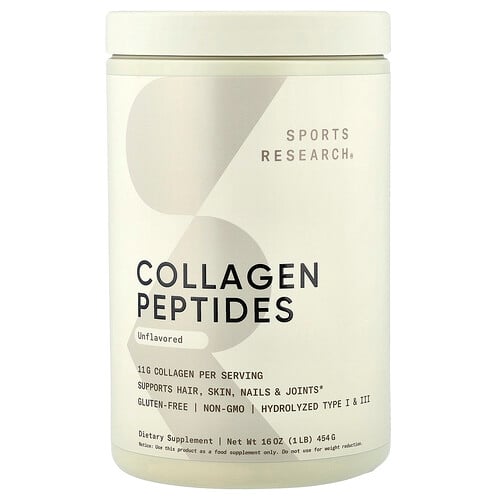
Sports Research, Collagen Peptides, Unflavored, 1 lb (454 g)
Capsules
Perfect for when you’re on the go and want a quick, convenient boost. If you prefer something you can take without mixing, try Sports Research Multi Collagen, 1,600 mg (90 Capsules), available on iHerb.
It combines multiple collagen types to support skin, joints, and overall wellness—all in an easy-to-swallow capsule. Plus, it’s formulated with hyaluronic acid and vitamin C to give your skin that extra boost!
And best of all? Its clean formula is non-GMO and contains no gluten or soy.
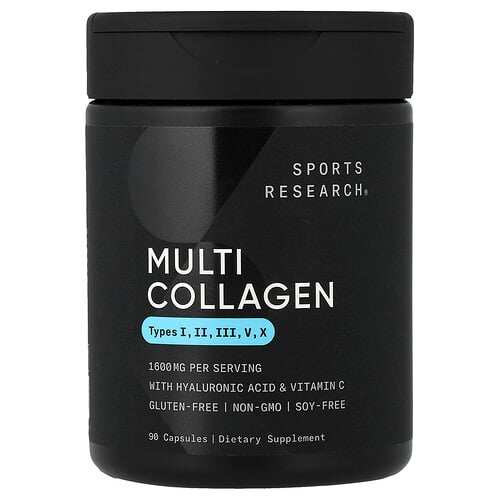
Sports Research, Multi Collagen , 1,600 mg, 90 Capsules
Liquids
Often blended with other skin- or health-supporting ingredients, making them a simple, ready-to-drink option.
With so many forms to choose from, it’s easy to find one that fits seamlessly into your day—and start enjoying the benefits of collagen peptides without any hassle.
Bone Broth and Collagen Peptides
Bone broth is made by simmering animal bones (often with some connective tissue and cartilage) in water for an extended period, sometimes with added vegetables and vinegar.
This slow cooking process breaks down the collagen in the bones and connective tissue into gelatin, which is partially broken-down collagen.
Research shows that the amino acid content of bone broth can vary widely depending on preparation methods and recipes. Key amino acids like glycine, proline, and hydroxyproline may be present in lower amounts than what’s found in standardized collagen peptide supplements.
Collagen Peptides vs. Gelatin
Gelatin (from bone broth) contains collagen but isn’t fully hydrolyzed and gels when cooled. Your body can digest it, but absorption is slower.
Collagen peptides are fully broken down into small, easily absorbed amino acids, making them more concentrated and convenient for supporting joints, skin, and overall health.
Bottom line?
Drinking bone broth is a delicious, nourishing option, but for consistent collagen intake and maximum absorption, collagen peptide supplements are more effective.
What to Look for When Choosing Collagen Peptides
With so many options out there, picking the right collagen peptides can feel overwhelming—but it doesn’t have to be.
Here’s what to keep in mind:
Source
Bovine (cow) and porcine (pig) are widely available, good for skin, joints, and bones, and have low allergy risk.
Marine (fish) is highly absorbable, popular for skin benefits, and free from disease risks like BSE.
Other sources include chicken, sheep, or goat, often used in specialized supplements or biomedical products.
Collagen Type
Different types of collagen support different parts of the body:
- Type I: Skin, tendons, and bones
- Type II: Cartilage
- Type III: Skin, muscles, blood vessels, and organs
Some products clearly list which types they include, so you can choose what matches your goals.
Purity
Look for collagen peptides without fillers, artificial ingredients, or unnecessary additives. Certifications like cGMP (Current Good Manufacturing Practice) can also give you confidence in quality.
Sustainability
If you go for marine collagen, choose one that’s sustainably sourced to support both your health and the planet.
A good option is Sports Research Marine Collagen, Unflavored, available on iHerb — made from wild-caught, sustainably sourced fish and designed to mix easily into your favorite drinks.
It contains 18 amino acids, including glycine and proline, which research shows are critical for collagen synthesis.
And with Sports Research, you can trust the quality: it’s non-GMO, gluten-free, third-party tested, and cGMP compliant.
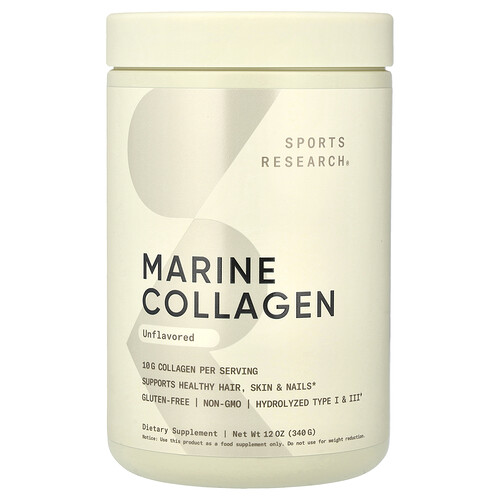
Sports Research, Marine Collagen, Unflavored, 12 oz (340 g)
Possible Side Effects and Precautions
For most people, collagen peptides are safe and gentle, with very few side effects.
That said, it’s always smart to be aware of a few things:
- Allergies: If you’re allergic to fish or shellfish, steer clear of marine collagen.
- Medical considerations: Check with your healthcare provider before taking collagen peptides if you’re pregnant, nursing, or managing any medical conditions.
- Digestive comfort: Choosing high-quality, third-party tested supplements can help minimize any potential digestive upset.
Overall, collagen peptides are well-tolerated by most people, making them a simple, low-risk way to support your skin, joints, and overall wellness.
Natural Ways to Support Your Body’s Collagen Production
Supplementing with collagen peptides is great, but there are also simple lifestyle habits that can help your body make the most of its collagen:
Eat Nutrient-Rich Foods
Vitamin C, zinc, and copper are essential for collagen production. Think citrus fruits, nuts, seeds, and leafy greens.
RELATED POST: The Ultimate Guide to Skin Nutrition: Nourish Your Skin from the Inside Out
Enjoy Bone Broth
It’s a natural source of collagen and makes for a cozy, nourishing addition to your meals.
Protect Your Skin
Limit sun exposure, wear sunscreen, and avoid smoking to prevent collagen breakdown.
Cut Back on Sugar
Excess sugar can accelerate collagen deterioration, so keeping it in check helps your skin stay firm and youthful.
Stay Hydrated and Eat Balanced Meals
Water and a well-rounded diet give your body the tools it needs to maintain healthy collagen levels.
RELATED POST: Why Drinking Water is So Important a for Healthy Skin
In short, combining smart lifestyle choices with collagen supplementation gives your body the best chance to look and feel its best.
Frequently Asked Questions (FAQs)
Final Thoughts
Collagen peptides are more than just a beauty trend—they’re a science-backed way to support your body from the inside out.
From boosting skin elasticity and hydration to easing joint discomfort and aiding muscle recovery, they give your body the essential amino acids it needs to keep producing collagen naturally.
Whether your goal is smoother skin, stronger joints, or simply feeling more vibrant every day, collagen peptides can be a simple and effective addition to your routine.
Pair them with a balanced diet, sun protection, and other healthy habits, and you’re setting yourself up for the best results. Think of collagen peptides as a little daily boost that helps your body look, move, and feel its best.
*This article is for informational purposes only and should not be considered medical or dermatological advice. Always consult with a dermatologist or qualified skincare professional for personalized recommendations tailored to your skin type and concerns.
Bolke, Liane et al. “A Collagen Supplement Improves Skin Hydration, Elasticity, Roughness, and Density: Results of a Randomized, Placebo-Controlled, Blind Study.” Nutrients vol. 11,10 2494. 17 Oct. 2019, doi:10.3390/nu11102494. Adapted and used under the terms of the Creative Commons Attribution 4.0 International License.
Choi, Franchesca D. et al. “Oral Collagen Supplementation: A Systematic Review of Dermatological Applications.” Journal of drugs in dermatology : JDD vol. 18,1 (2019): 9-16, https://pubmed.ncbi.nlm.nih.gov/30681787/. Abstract only.
Czajka, Anna et al. “Daily oral supplementation with collagen peptides combined with vitamins and other bioactive compounds improves skin elasticity and has a beneficial effect on joint and general wellbeing.” Nutrition research (New York, N.Y.) vol. 57 (2018): 97-108. doi:10.1016/j.nutres.2018.06.001. Abstract only.
de Paz-Lugo, Patricia et al. “Control analysis of collagen synthesis by glycine, proline and lysine in bovine chondrocytes in vitro - Its relevance for medicine and nutrition.” Bio Systems vol. 232 (2023): 105004. doi:10.1016/j.biosystems.2023.105004. Abstract only.
"Facts About the Current Good Manufacturing Practice (CGMP)." U.S. Food and Drug Administration, https://www.fda.gov/drugs/pharmaceutical-quality-resources/facts-about-current-good-manufacturing-practice-cgmp. Accessed 6 Nov. 2025.
Hwang, Su Bin et al. “Hair-Growth-Promoting Effects of the Fish Collagen Peptide in Human Dermal Papilla Cells and C57BL/6 Mice Modulating Wnt/β-Catenin and BMP Signaling Pathways.” International journal of molecular sciences vol. 23,19 11904. 7 Oct. 2022, doi:10.3390/ijms231911904. Adapted and used under the terms of the Creative Commons Attribution 4.0 International License.
Jalili, Zahra et al. “Effects of collagen peptide supplementation on cardiovascular markers: a systematic review and meta-analysis of randomised, placebo-controlled trials.” The British journal of nutrition vol. 129,5 (2023): 779-794. doi:10.1017/S0007114522001301. Abstract only.
König, Daniel et al. “Specific Collagen Peptides Improve Bone Mineral Density and Bone Markers in Postmenopausal Women-A Randomized Controlled Study.” Nutrients vol. 10,1 97. 16 Jan. 2018, doi:10.3390/nu10010097. Adapted and used under the terms of the Creative Commons Attribution 4.0 International License.
Sun, Chongxiao et al. “Efficacy of collagen peptide supplementation on bone and muscle health: a meta-analysis.” Frontiers in nutrition vol. 12 1646090. 18 Sep. 2025, doi:10.3389/fnut.2025.1646090. Adapted and used under the terms of the Creative Commons Attribution 4.0 International License.
Vleminckx, Sara et al. “Influence of collagen peptide supplementation on visible signs of skin and nail health and -aging in an East Asian population: A double blind, randomized, placebo-controlled trial.” Journal of cosmetic dermatologyvol. 23,11 (2024): 3645-3653. doi:10.1111/jocd.16458. Abstract only.
Wang, Hsiuying. “A Review of the Effects of Collagen Treatment in Clinical Studies.” Polymers vol. 13,22 3868. 9 Nov. 2021, doi:10.3390/polym13223868. Adapted and used under the terms of the Creative Commons Attribution 4.0 International License.
Wijesekara, Tharuka et al. “Effect of Bioactive Peptides on Gut Microbiota and Their Relations to Human Health.” Foods (Basel, Switzerland) vol. 13,12 1853. 13 Jun. 2024, doi:10.3390/foods13121853. Adapted and used under the terms of the Creative Commons Attribution 4.0 International License.

Malin, co-founder of Courier Beauty, has a BA in Fashion Marketing and a PG certificate in Fashion & Luxury Goods Management. She’s passionate about skin health through nutrition and creates content focused on radiant skin and holistic wellness.