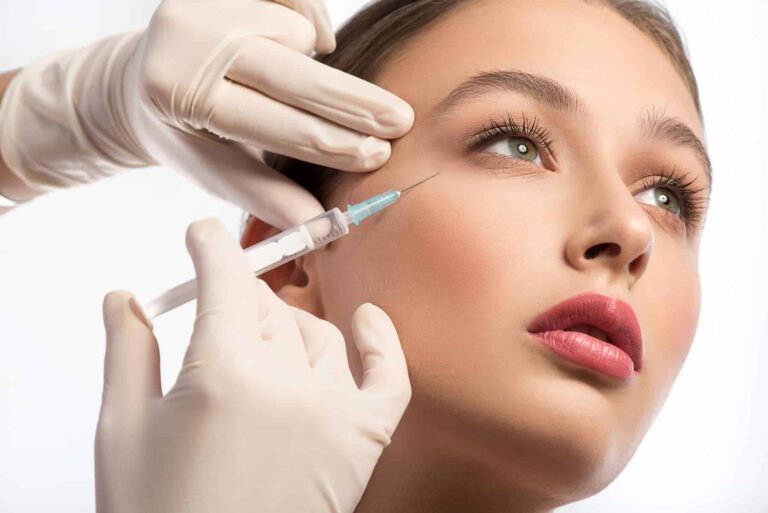


7 Ways Stress Destroys Your Collagen Levels And How to Stop It
Do you feel stressed out all the time? If so, have you noticed that your skin is showing more wrinkles and sagging as a result?
You’re definitely not alone. Stress and collagen levels are actually more connected than you might think. Here’s the deal: when stress hits, your body cranks up cortisol levels—your stress hormone.
And guess what?
Cortisol can actually break down collagen, leading to weaker skin and those signs of aging we all try to avoid.
But don’t panic! There’s a silver lining. The good news is that you can fight back.
In this article, I’m going to break down exactly how stress messes with your collagen levels, and most importantly, I’ll give you some practical tips on how to boost your collagen and keep your skin looking fresh and youthful.
This post contains affiliate links, which means we may earn a commission if you purchase through our links—at no extra cost to you. As an Amazon Associate we earn from qualifying purchases. We only recommend products we use or trust. Learn more about affiliate marketing or read our full disclosure.
What Exactly Is Collagen?
Before we dive into how stress messes with your collagen levels, let’s first take a moment to understand what collagen actually is.
Collagen is the “glue” that holds everything together in your body. It’s a fibrous protein that gives your skin strength, elasticity, and helps support your bones, cartilage, and blood vessels.
Found this helpful? Pin it for later so you can come back anytime.

Collagen is essential for maintaining the structure and function of your body—without it, things wouldn’t stay strong or supported.
There are several different types of collagen, each with its own specific role:
- Type I: The most abundant type, found in your skin, tendons, bones, and internal organs.
- Type II: Mainly found in cartilage, helping your joints stay cushioned.
- Type III: Located in your arteries and skin, keeping them flexible and resilient.
- Type IV: Found in the basement membrane of your skin, supporting its structure.
While collagen naturally decreases as we age, external factors—like sun exposure, smoking, poor diet, and especially stress—can speed up the process.
RELATED POST: 10 External Factors That Cause Skin Aging and How to Slow It Down
Understanding Stress and What It Does to Your Body
When you’re stressed, your body goes into overdrive, triggering a complex chain of events known as the “stress response.”
Here’s how it works: When your brain senses a threat, it sends a signal to your adrenal glands, which then release stress hormones like cortisol, adrenaline, and norepinephrine.
In short bursts—like during a real-life emergency—this response is actually super helpful. It prepares your body to either fight or flee, which is essential for survival.
But here’s the thing: when stress becomes chronic, these hormones stay elevated. And that’s when things start to go sideways.
When your stress hormones are constantly high, they mess with a bunch of vital processes in your body—like metabolism, immune function, and tissue repair.
And guess what?
Collagen plays a major role in tissue repair.
So, when these processes get disrupted, your collagen production takes a hit, leading to all sorts of skin issues and signs of aging.
RELATED POST: 4 Easy Ways to Boost Collagen Naturally for Youthful Skin
How Stress Affects Collagen Production
Now that we’ve seen how harmful stress can be, let’s break down the specific ways it can actually reduce your collagen levels:
1. Elevated Cortisol Levels
Cortisol, often called the “stress hormone,” is a major player in how stress affects collagen.
When cortisol levels stay high for too long (thanks to chronic stress), it can wreak havoc on your collagen production.
Here’s how:
inhibits fibroblast function
Fibroblasts are the cells responsible for producing collagen. High cortisol suppresses their ability to do their job, which means less collagen gets made.
increases mmps (matrix metalloproteinases)
These enzymes break down collagen and other proteins in the extracellular matrix. High stress ramps up MMP production, speeding up the breakdown of collagen.
reduces amino acid availability
Your body uses specific amino acids (like proline, glycine, and lysine) to make collagen.
Cortisol messes with your metabolism, which can decrease the availability of these amino acids—leaving less material for collagen production.
2. Oxidative Stress
When stress sticks around for too long, it also increases something called oxidative stress—basically, an imbalance between free radicals and antioxidants in your body.
Free radicals are unstable molecules that can cause all sorts of damage, including to the cells that help maintain your collagen.
Here’s how oxidative stress impacts your collagen:
damages fibroblast dna
Free radicals can mess with the DNA of fibroblasts, which makes it harder for them to produce collagen.
breaks down existing collagen fibers
Oxidative stress causes reactions (thanks to reactive oxygen species, or ROS) that attack and degrade the collagen fibers you already have.
decreases antioxidant defenses
Antioxidants are key to protecting your collagen. But when stress takes over, it can lower your body’s antioxidant defenses, leaving your collagen vulnerable to damage.
RELATED POST: Signs of Oxidative Stress on Skin & How to Reduce It
3. Increased Inflammatory Cytokines
Stress also triggers the release of pro-inflammatory cytokines, like interleukin-6 (IL-6) and tumor necrosis factor-alpha (TNF-α).
These little guys are involved in your body’s inflammatory response, but when they’re constantly elevated due to chronic stress, they can throw everything off balance.
This can lead to:
decreased collagen synthesis
Chronic inflammation can directly reduce your body’s ability to make new collagen.
increased collagen degradation
On top of that, inflammation speeds up the breakdown of the collagen you already have.
poor wound healing
Inflammation also messes with the body’s natural healing processes, making it harder for skin to recover.
This constant state of inflammation can also contribute to skin conditions like:
- Eczema
- Psoriasis
- Rosacea
Each of these involves a weakened collagen structure.
Found this helpful? Pin it for later so you can come back anytime.
4. Impaired Blood Flow
Chronic stress can also mess with your blood flow by causing vasoconstriction—basically, the narrowing of your blood vessels.
When that happens, less oxygen and fewer nutrients are delivered to your skin and connective tissues, making it harder for your body to produce and maintain collagen.
Here’s how reduced blood flow impacts collagen:
limits fibroblast activity
With less oxygen and nutrients reaching the fibroblasts, their ability to produce collagen gets hindered.
starves tissues of vitamin c
Vitamin C is essential for collagen synthesis, but poor circulation can prevent it from reaching the tissues where it’s needed most.
RELATED POST: The 8 Amazing Benefits of Vitamin C for Your Skin
slows overall skin and tissue regeneration
Without proper blood flow, your skin and tissues take longer to regenerate and repair, leaving them more vulnerable to aging and damage.
5. Hormonal Imbalances
Stress isn’t just messing with your mood—it’s also messing with your hormones, and that can seriously affect your collagen.
Here’s how:
decreases estrogen levels
Especially for women, stress can lower estrogen, and since estrogen helps boost collagen production, lower levels mean your skin can become thinner and less elastic.
alters growth hormone and igf-1
Stress also messes with the secretion of growth hormone and insulin-like growth factor (IGF-1).
These are both super important for cell growth and collagen production, so when they’re out of balance, your skin suffers.
6. Gut Health and Collagen Production
Chronic stress doesn’t just affect your mood—it can also mess with your gut health, leading to an imbalance in your gut microbiome (a condition called dysbiosis).
When this happens, it can cause a whole bunch of issues.
Here is how it can affect your collagen production:
increases intestinal permeability (leaky gut)
Stress can make your gut more “leaky,” allowing toxins and harmful bacteria to slip into your bloodstream. This triggers systemic inflammation, which speeds up collagen breakdown.
impairs nutrient absorption
Your gut is responsible for absorbing the nutrients your body needs, including the ones essential for collagen production—like amino acids and Vitamin C.
When your gut health is off, these nutrients can’t be absorbed properly, leaving your collagen production starving for the building blocks it needs.
heightens inflammation
A stressed-out gut increases the production of inflammatory cytokines, which can further degrade collagen and slow down tissue healing.
On top of that, an imbalanced microbiome can mess with your immune system, making it even harder for your body to repair and regenerate collagen.
It’s a vicious cycle!
7. Impaired Skin Barrier Function
Chronic stress doesn’t just impact your mood—it can also weaken your skin’s protective barrier, making it more vulnerable to dehydration, pollution, and harmful bacteria.
This can indirectly mess with your collagen levels in a few ways:
dehydration
When your skin’s barrier is compromised, it has a harder time holding onto moisture. This reduces elasticity and makes signs of aging, like fine lines, more noticeable.
increased inflammation
A weakened barrier leads to higher levels of inflammation, which can activate collagen-degrading enzymes (like matrix metalloproteinases, or MMPs).
reduced ability to repair
When your skin’s barrier is damaged, it struggles to heal itself. This means your skin needs more collagen to repair even minor damage, further draining your collagen reserves.
RELATED POST: Understanding the Role of Acid Mantle for Great Skin
Visible Effects of Stress-Induced Collagen Loss
When stress slows down collagen production and speeds up its breakdown, the effects can show up on your skin—and sometimes in ways that are hard to ignore:
Premature Wrinkling
Without enough collagen, your skin starts losing its elasticity, leading to fine lines and deeper wrinkles appearing earlier than you’d like.
Sagging Skin
As collagen decreases, your skin loses its strength, leading to sagging—especially around the jawline, eyes, and cheeks.
Delayed Wound Healing
When you get a cut, bruise, or scrape, your skin takes longer to heal due to the lack of collagen support.
Joint Pain and Weakness
Collagen is essential for cartilage, which cushions your joints. When collagen breaks down, cartilage wears down, leading to joint discomfort and stiffness.
Thinning Hair
Since collagen helps maintain the structure of hair follicles, its loss can result in thinning hair and increased breakage.
Stress Management: A Key to Healthy Collagen
Given how much stress can impact your collagen, managing stress isn’t just a mental health win—it’s crucial for your physical health and anti-aging efforts too.
By keeping stress in check, you can actually help protect your collagen and keep your skin looking its best.
Here are some effective Strategies to Reduce Stress and Support Collagen:
1. Yoga, Mindfulness and Meditation
Taking time for mindfulness practices like meditation and yoga can do wonders for your stress levels—and your collagen.
Regular meditation is a powerful tool for lowering cortisol, which gives your collagen a chance to thrive.
In fact, programs like Mindfulness-Based Stress Reduction (MBSR) have been shown to reduce inflammation markers, which means less breakdown of collagen and healthier skin overall.
And it gets even better: studies show that yoga and breathing techniques can help downregulate the HPA axis and the sympathetic nervous system, which lowers cortisol levels and helps prevent reduced collagen production.
So not only are you calming your mind, but you’re also giving your skin a helping hand in staying youthful and strong.
book tip

The Headspace Guide to Meditation and Mindfulness
By Andy Puddicombe
This book breaks meditation down into bite-sized, actionable steps.
Did you know? When you buy from Bookshop.org, you help support independent bookstores.
2. Exercise
Getting the right amount of physical activity is a great way to reduce stress and support collagen production.
Moderate exercise—like yoga, walking, or strength training—can help lower stress hormones while boosting growth factors that are essential for collagen synthesis.
But, as with everything, balance is key. Overdoing it can actually increase oxidative stress, which isn’t great for your collagen.
So, aim for consistency without pushing yourself too hard.
3. Nutrition
- Adequate Protein: Your body needs amino acids to build collagen, so make sure you’re getting enough protein in your diet.
- Antioxidant-Rich Foods: Eating foods like blueberries, spinach, kale, and sipping on green tea can help protect your collagen by fighting oxidative stress.
- Vitamin C: This vitamin is essential for collagen synthesis, so make sure to load up on citrus fruits, strawberries, bell peppers, and broccoli.
- Collagen Supplements: Hydrolyzed collagen peptides are a great way to give your body an extra boost in collagen production.
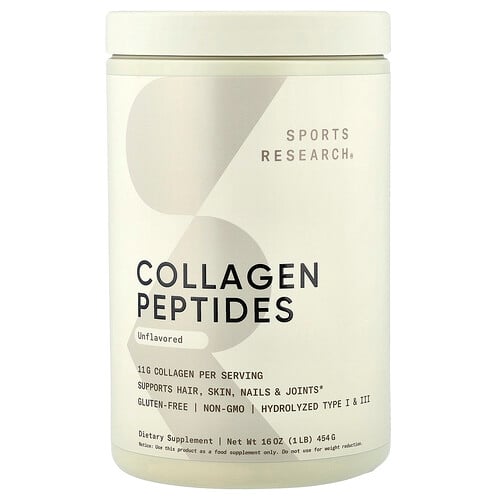
Sports Research, Collagen Peptides, Unflavored, 16 oz (454 g)
RELATED POST: 6 Miracle Foods You Should Be Eating for Younger-Looking Skin
4. Adequate Sleep
Getting enough sleep is more than just a way to recharge—it’s also crucial for your collagen health.
When you don’t get enough rest, cortisol levels and inflammatory cytokines rise, which accelerates the breakdown of collagen.
On the flip side, during deep sleep, your body goes into repair mode. It works hard to fix tissues and balance hormone levels—both of which are vital for keeping collagen levels healthy and strong.
So, don’t underestimate the power of a good night’s sleep—it’s one of the simplest ways to support your skin and body from the inside out.
RELATED POST: 9 Benefits of Beauty Sleep: More than Just a Good Night’s Sleep
5. Professional Therapy
Sometimes, managing stress requires a bit of professional support, and there are some fantastic tools available.
Biofeedback and stress management coaching can be incredibly helpful in teaching you how to handle stress more effectively by giving you real-time feedback on your body’s response to stress.
In addition, Cognitive Behavioral Therapy (CBT) and other counseling techniques are excellent for tackling chronic stress and breaking those unhelpful stress patterns.
These approaches can help you reframe your thoughts, manage stress better, and ultimately protect your collagen from the inside out.
6. Limiting Environmental Stressors
It’s not just internal stress that can affect your collagen—environmental factors can also play a big role.
For starters, be mindful of exposure to environmental toxins, which can take a toll on your collagen and overall skin health.
One of the simplest ways to protect your skin is by using sunscreen regularly. A great option is Supergoop! Unseen Sunscreen – SPF 50 (available on Amazon).
UV damage is a major culprit in collagen breakdown, so make it a habit to apply sunscreen, even on cloudy days.
RELATED POST: 6 Ways to Protect Your Skin From Sun Damage
Also, try to avoid smoking and drinking too much alcohol—both of which can speed up collagen degradation and contribute to premature aging.
Taking steps to limit these environmental stressors will go a long way in helping you preserve your collagen and keep your skin looking its best.
Final Thoughts
The link between stress and reduced collagen is pretty complex, but one thing’s clear: chronic stress messes with collagen production and speeds up its breakdown.
This leads to premature aging, weakened joints, slower healing, and a whole bunch of other health issues.
The good news?
We have the power to take action. By understanding how stress affects our bodies, we can take steps to protect our collagen and overall health.
Managing stress through mindfulness, exercise, a balanced diet, and other healthy habits doesn’t just make us feel better—it actually strengthens the foundation of our bodies, from the inside out.
Prioritizing self-care isn’t just a luxury; it’s biology at work.
By protecting ourselves from stress, we’re preserving the youthful, resilient “architecture” that keeps us strong, healthy, and vibrant for years to come.
*This article is for informational purposes only and should not be considered medical or dermatological advice. Always consult with a dermatologist or qualified skincare professional for personalized recommendations tailored to your skin type and concerns.
Acoba, EF. “Social support and mental health: the mediating role of perceived stress.” Front. Psychol. 15:1330720, (2024), doi: 10.3389/fpsyg.2024.1330720. Adapted and used under the terms of the Creative Commons Attribution 4.0 International License.
Aeon, Brad et al. “Does time management work? A meta-analysis.” PloS one vol. 16,1 e0245066. 11 Jan. 2021, doi:10.1371/journal.pone.0245066. Adapted and used under the terms of the Creative Commons Attribution 4.0 International License.
Beri, Kavita. “Breathing to younger skin: 'reversing the molecular mechanism of skin aging with yoga'.” Future science OA vol. 2,2 FSO122. 9 May. 2016, doi:10.4155/fsoa-2016-0015. Adapted and used under the terms of the Creative Commons Attribution 4.0 International License.
Cao, Changwei et al. “Diet and Skin Aging-From the Perspective of Food Nutrition.” Nutrients vol. 12,3 870. 24 Mar. 2020, doi:10.3390/nu12030870. Adapted and used under the terms of the Creative Commons Attribution 4.0 International License.
Cena, Hellas, and Philip C Calder. “Defining a Healthy Diet: Evidence for The Role of Contemporary Dietary Patterns in Health and Disease.” Nutrients vol. 12,2 334. 27 Jan. 2020, doi:10.3390/nu12020334. Adapted and used under the terms of the Creative Commons Attribution 4.0 International License.
Chae, Minjung et al. “AP Collagen Peptides Prevent Cortisol-Induced Decrease of Collagen Type I in Human Dermal Fibroblasts.” International journal of molecular sciences vol. 22,9 4788. 30 Apr. 2021, doi:10.3390/ijms22094788. Adapted and used under the terms of the Creative Commons Attribution 4.0 International License.
Chen, Ying, and John Lyga. “Brain-skin connection: stress, inflammation and skin aging.” Inflammation & allergy drug targets vol. 13,3 (2014): 177-90. doi:10.2174/1871528113666140522104422. Adapted and used under the terms of the Creative Commons Attribution-Noncommercial 3.0 Unported License.
Cherpak, Christine E. “Mindful Eating: A Review Of How The Stress-Digestion-Mindfulness Triad May Modulate And Improve Gastrointestinal And Digestive Function.” Integrative medicine (Encinitas, Calif.) vol. 18,4 (2019): 48-53, https://www.ncbi.nlm.nih.gov/pmc/articles/PMC7219460/.
De Tollenaere, Morgane et al. “Well-aging: A new strategy for skin homeostasis under multi-stressed conditions.” Journal of cosmetic dermatology vol. 19,2 (2020): 444-455. doi:10.1111/jocd.13047. Adapted and used under the terms of the Creative Commons Attribution-NonCommercial 4.0 International License.
Eime, Rochelle M et al. “A systematic review of the psychological and social benefits of participation in sport for children and adolescents: informing development of a conceptual model of health through sport.” The international journal of behavioral nutrition and physical activity vol. 10 98. 15 Aug. 2013, doi:10.1186/1479-5868-10-98. Adapted and used under the terms of the Creative Commons Attribution 2.0 Generic License.
Hou, Wai Kai et al. “Regularizing daily routines for mental health during and after the COVID-19 pandemic.” Journal of global health vol. 10,2 (2020): 020315. doi:10.7189/jogh.10.020315. Adapted from and used under the terms of the Creative Commons Attribution 4.0 International License.
Kabat-Zinn, Jon. “Full Catastrophe Living: Using the Wisdom of Your Body and Mind to Face Stress, Pain, and Illness.” 15th Anniversary ed., Delta Trade Paperback/Bantam Dell, 2005, https://psycnet.apa.org/record/2006-04192-000.
Kahan, V et al. “Can poor sleep affect skin integrity?.” Medical hypotheses vol. 75,6 (2010): 535-7. doi:10.1016/j.mehy.2010.07.018.
Kahan, V et al. “Stress, immunity and skin collagen integrity: evidence from animal models and clinical conditions.” Brain, behavior, and immunity vol. 23,8 (2009): 1089-95. doi:10.1016/j.bbi.2009.06.002.
Liska, DeAnn et al. “Narrative Review of Hydration and Selected Health Outcomes in the General Population.” Nutrients vol. 11,1 70. 1 Jan. 2019, doi:10.3390/nu11010070. Adapted and used under the terms of the Creative Commons Attribution 4.0 International License.
Roberts Stoler, Diane, Ed.D. "The Many Mental Benefits of Decluttering." Psychology Today, 15 February 2023, https://www.psychologytoday.com/intl/blog/the-resilient-brain/202302/the-many-mental-benefits-of-decluttering. Accessed 11 August 2024.
Schultchen, Dana et al. “Bidirectional relationship of stress and affect with physical activity and healthy eating.” British journal of health psychologyvol. 24,2 (2019): 315-333. doi:10.1111/bjhp.12355. Adapted and used under the terms of the Creative Commons Attribution 4.0 International License.
Truscott, A., et al. "Defining Young People’s Mental Health Self-Care: A Systematic Review and Co-Development Approach." European Child & Adolescent Psychiatry, 2023, https://doi.org/10.1007/s00787-023-02320-7. Adapted and used under the terms of the Creative Commons Attribution 4.0 International License.
Twohig-Bennett, Caoimhe, and Andy Jones. “The health benefits of the great outdoors: A systematic review and meta-analysis of greenspace exposure and health outcomes.” Environmental research vol. 166 (2018): 628-637. doi:10.1016/j.envres.2018.06.030. Adapted and used under the terms of the Creative Commons Attribution 4.0 International License.
Wang, Hsiuying. “A Review of the Effects of Collagen Treatment in Clinical Studies.”Polymers, vol. 13,22 3868. 9 Nov. 2021, doi:10.3390/polym13223868. Adapted and used under the terms of the Creative Commons Attribution 4.0 International License.
Widener, Michael J et al. “An exploration of how meal preparation activities relate to self-rated time pressure, stress, and health in Canada: A time use approach.” SSM - population health vol. 15 100818. 21 May. 2021, doi:10.1016/j.ssmph.2021.100818. Adapted and used under the terms of the Creative Commons Attribution 4.0 International License.
Zaccaro, Andrea et al. “How Breath-Control Can Change Your Life: A Systematic Review on Psycho-Physiological Correlates of Slow Breathing.” Frontiers in human neuroscience vol. 12 353. 7 Sep. 2018, doi:10.3389/fnhum.2018.00353. Adapted and used under the terms of the Creative Commons Attribution 4.0 International License.

Malin, co-founder of Courier Beauty, has a BA in Fashion Marketing and a PG certificate in Fashion & Luxury Goods Management. She’s passionate about skin health through nutrition and creates content focused on radiant skin and holistic wellness.