

Understanding the Role of Acid Mantle for Great Skin
When it comes to getting healthy, glowing skin, we often hear about the latest skincare products, must-have ingredients, or the next big beauty trend.
But here’s the truth: the secret to great skin goes way beyond those trendy products. It starts with something you might not even know about—your acid mantle.
Yep, this invisible protective layer plays a huge role in keeping your skin healthy, balanced, and glowing. In fact, it’s essential for protecting your skin from damage and helping it do its job properly.
In this article, we will delve into what the acid mantle is, why it’s so important for your skin, and how to keep it in tip-top shape for that radiant, healthy glow.
Let’s dive in!
This post contains affiliate links, which means we may earn a commission if you purchase through our links—at no extra cost to you. As an Amazon Associate we earn from qualifying purchases. We only recommend products we use or trust. Learn more about affiliate marketing or read our full disclosure.
What is the Acid Mantle?
So, what exactly is this mysterious “acid mantle“?
Think of it as a super-thin, protective shield that covers your skin.
Found this helpful? Pin it for later so you can come back anytime.

It’s made up of sebum (the natural oils your skin produces) and sweat, and together they create a slightly acidic layer with a pH of around 4.5 to 5.5.
It may sound technical, but this little film plays a big role in keeping your skin healthy.
This slightly acidic pH is crucial because it helps your skin do some pretty important things:
Locks in Hydration
The acid mantle acts like a barrier, helping your skin keep moisture locked in so it doesn’t dry out.
Keeps Harmful Bacteria at Bay
That acidic environment helps protect your skin from harmful microorganisms—like bacteria and fungi—that could cause trouble.
Balances Your Skin’s Oils
It keeps your skin’s oil levels just right, which means you’re less likely to deal with dryness or an overproduction of oil.
Supports Natural Exfoliation
It even helps your skin shed dead cells, keeping your complexion smooth and fresh.
To put it simply, the acid mantle is a key player in your skin’s defense system. It helps everything function smoothly, from hydration to protection, keeping your skin healthy and glowing.
How the Acid Mantle Works
Your skin is like your body’s first line of defense—it’s constantly fending off environmental pollutants, UV rays, toxins, and harmful germs.
The acid mantle is like a superhero sidekick, working behind the scenes as both a physical and chemical shield to protect your skin.
Here’s how it does its magic:
1. Prevents Dehydration
Your skin is always exposed to air, and that exposure can lead to moisture loss.
But don’t worry, your acid mantle is on the job!
It acts like a barrier, locking in moisture and keeping water from evaporating off your skin.
This helps:
- Maintain your skin’s elasticity
- Prevent dryness, flakiness
- Slow down aging
So, keeping your acid mantle healthy is key to keeping your skin plump and hydrated.
2. Bacterial Protection
The acid mantle’s slightly acidic vibe isn’t just for show—it actually makes your skin a tough place for harmful bacteria, fungi, and viruses to thrive.
At the same time, your skin’s surface is home to a whole community of beneficial microorganisms, known as the skin microbiome.
Together, they form a little ecosystem that helps keep your skin in check. These friendly bacteria work alongside the acid mantle to protect your skin from nasty invaders.
But when the balance of the acid mantle gets disrupted—whether by harsh products or environmental stressors—it can throw off this delicate ecosystem, making your skin more prone to infections and irritation.
3. pH Regulation
Your skin’s pH typically falls between 4.5 and 5.5, making it mildly acidic.
This slight acidity is key to keeping everything in balance—it helps support the enzymes responsible for shedding dead skin cells and promoting the growth of new ones.
To put it simply, the acid mantle is vital for maintaining the perfect pH, which in turn helps your skin stay healthy and protected.
Here’s a quick breakdown of how different pH levels can affect your skin:
|
Skin pH |
Effect on Skin |
|
Ideal pH (4.5 – 5.5) |
Skin stays balanced, healthy, and protected from bacteria and irritants. |
|
Too acidic (below 7) |
Can lead to excessive oil production, clogged pores, and breakouts. |
|
Too alkaline (above 7) |
Skin may lose moisture, appear dull, and become prone to wrinkles. |
RELATED POST: How to Balance Skin pH Level for Healthy Glow
4. Balances Oil Production
The sebum that makes up part of the acid mantle helps to keep your skin lubricated and protected.
When your acid mantle is healthy and intact, it plays a big role in balancing oil production.
It keeps things in check, preventing your skin from becoming:
- Too oily (which can lead to acne and clogged pores), or
- Too dry (which can cause irritation, fine lines, and sensitivity)
A well-maintained acid mantle helps strike that perfect balance, so your skin stays smooth, healthy, and glowing.
5. Supports Skin Healing
A strong, healthy acid mantle is key to helping your skin heal naturally.
When this protective barrier is compromised by harsh products or environmental stress for example, it can slow down your skin’s healing process, leaving you with redness, irritation, or even inflammation.
But when your acid mantle is in good shape, it helps promote tissue repair by keeping your skin hydrated and shielded from external irritants.
In other words, it’s like giving your skin the support it needs to bounce back faster and look its best.
Factors That Disrupt the Acid Mantle
The acid mantle is essential for healthy skin, but it’s surprisingly easy for it to get disrupted.
When that happens, your skin becomes more vulnerable to things like dehydration, irritation, and inflammation.
Here are some common culprits that can throw your acid mantle off balance:
1. Harsh Cleansers
One of the biggest offenders is using harsh or overly alkaline cleansers.
A lot of commercial soaps and face washes have a higher pH, which can strip away your skin’s natural oils and mess with its pH balance.
When that happens, the acid mantle can get damaged, leaving your skin more prone to:
- Dryness
- Irritation
- Infections
So, be mindful of what you’re using to cleanse—it’s better to choose something gentle that supports your skin’s natural barrier.
2. Overwashing
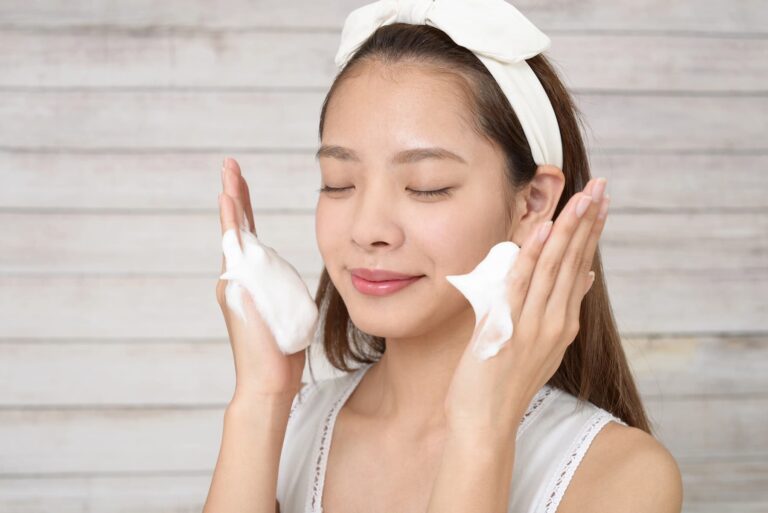
Cleansing is an important part of any skincare routine, but when you go overboard, it can actually do more harm than good.
Overwashing your face—whether it’s too frequent washing or using hot water—can strip your skin of its natural oils and disrupt the acid mantle.
When this happens, your skin becomes too dry, and in response, it may overproduce oil, leading to clogged pores and breakouts.
So, while cleansing is key, it’s all about finding that sweet spot to keep your skin clean without going overboard.
3. Excessive Exfoliation
Exfoliating is great for sloughing off dead skin cells and boosting cell turnover, but too much of a good thing can actually hurt your skin.
Over-exfoliating—whether with harsh scrubs that have big, rough particles or by using chemical exfoliants like AHAs and BHAs too often—can damage your acid mantle.
When that happens, your skin’s protective barrier takes a hit, making it more vulnerable to:
- Irritation
- Dryness
- Sensitivity
So, while exfoliating can give your skin a nice glow, it’s all about balance—moderation is key!
4. Environmental Factors
Your skin is constantly up against environmental stressors, and these can take a toll on your acid mantle.
Things like:
- Pollution
- UV rays
- Extreme weather conditions (whether it’s harsh winds or high humidity)
can all disrupt the balance.
Pollution, for example, leaves harmful particles on your skin, while UV radiation can break down the lipids in your skin—those little fats that are essential for maintaining your acid mantle.
Cold weather, on the other hand, can dry your skin out, making it more vulnerable to irritation and dehydration.
So, your skin needs a little extra care when it’s up against the elements.
5. Certain Skin Conditions
Skin conditions like eczema, psoriasis, and rosacea can also throw a wrench in your acid mantle’s function.
When these conditions flare up, they often cause inflammation and disrupt the skin’s natural barrier.
This leaves your skin more vulnerable to irritation and infection, and makes it harder for your acid mantle to do its protective job.
If you’re dealing with one of these conditions, it’s even more important to be mindful of how you care for your skin to help support its healing and protection.
6. Diet and Lifestyle
What you eat and how you live can have a big impact on the health of your acid mantle.
Diets that are high in sugar and processed foods can trigger inflammation, which messes with your skin’s ability to keep its natural pH in check.
On top of that, habits like smoking and drinking too much alcohol can dehydrate your skin, weakening its protective barrier.
So, taking care of your skin isn’t just about what you put on it—it’s also about what you put in your body and how you treat it overall!
How to Maintain a Healthy Acid Mantle
If you want great skin, keeping your acid mantle in top shape is a must.
The good news is, it’s pretty simple to support and preserve this protective layer with the right skincare habits.
Here are some key tips to keep your acid mantle healthy and happy:
1. Use pH-Balanced Skin Care Products
Look for cleansers, moisturizers, and serums that are specially formulated to keep your skin’s natural pH balance in check (around 4.5 to 5.5).
Products labeled as “pH-balanced” or “gentle” are your best bet, as they won’t strip your skin of its natural oils.
Steer clear of products with high pH levels—like most soaps—because they can throw off your acid mantle’s balance and leave your skin vulnerable
One study found that adolescents who overuse facial cleansers are more likely to develop rosacea. It’s a reminder that sometimes, less is more when it comes to cleansing!
If you’re looking for a gentle yet effective cleanser that won’t mess with your skin’s pH, consider giving iS Clinical Cleansing Complex (from Amazon) a try.
It’s a favorite among skincare enthusiasts because it cleanses deeply without stripping away your skin’s natural oils. Plus, it’s formulated to support your acid mantle, so your skin stays balanced and protected.
Found this helpful? Pin it for later so you can come back anytime.

2. Avoid Over-Cleansing
Most people don’t need to wash their face more than twice a day—once in the morning and once at night is usually enough.
And when you do cleanse, stick to lukewarm water rather than hot water to avoid stripping your skin of its natural oils.
If you have dry or sensitive skin, you might even want to cut back on how often you cleanse and choose a more hydrating cleanser that helps support your skin’s moisture barrier.
The goal is to keep your skin clean without over-drying or irritating it.
If you’re looking for a cleanser that’s kind to your skin, especially if it’s on the dry or sensitive side, SkinCeuticals Gentle Cleanser (from Dermstore) might be a great option.
It’s formulated to cleanse without stripping your skin or disrupting its natural barrier, making it perfect for maintaining that balance we’re all after.
Plus, it’s super hydrating, so it leaves your skin feeling soft and comfortable, not tight or dry. If you’re trying to avoid over-cleansing or drying out your skin, this one’s definitely worth considering.
3. Exfoliate Gently
Exfoliating is great for getting rid of dead skin cells and giving your skin that fresh, glowing look, but you want to be careful not to overdo it.
Stick to gentle exfoliants, like enzymatic formulas or mild chemical exfoliants (lactic acid, for example, is much kinder to your skin than stronger acids like glycolic).
It’s best to skip physical scrubs with rough particles that can be too abrasive and end up damaging your skin’s protective barrier.
The goal is smooth, healthy skin—not irritation!
If you’re looking for a gentle yet effective exfoliant, SkinMedica AHA/BHA Exfoliating Cleanser could be a great option. It combines AHA and BHA to help remove dead skin cells and promote a smoother, brighter complexion.
The formula is mild enough to use 1-2 times a week, so you can enjoy the benefits of exfoliation without overdoing it.
It’s available on Amazon, and it might just become a perfect addition to your routine when you’re looking to refresh your skin without irritation.
RELATED POST: 10 External Factors That Cause Skin Aging and How to Slow It Down
4. Hydrate and Moisturize
Keeping your skin hydrated is essential for maintaining a healthy acid mantle.
Look for moisturizers that contain ingredients like:
- Ceramides
- Hyaluronic acid
- Glycerin
These help lock in moisture and strengthen your skin’s natural barrier.
And yes, even if you have oily skin, hydration is still key! Just be sure to choose lightweight, non-comedogenic formulas that won’t clog your pores but will still give your skin the moisture it needs.
RELATED POST: Why Drinking Water is So Important for a Healthy Skin
5. Use Sunscreen
We all know that sunscreen is a must, but did you know UV rays can also break down your skin’s natural oils and damage your acid mantle?
To keep your skin protected, apply a broad-spectrum sunscreen with SPF 30 or higher every day—rain or shine.
And for an extra boost, look for sunscreens that contain antioxidants like vitamin C or niacinamide. These help shield your skin from not just UV damage, but other environmental stressors too, keeping your acid mantle strong and your skin looking healthy.
For a sunscreen that not only protects but also supports your skin’s health, EltaMD UV Clear Broad-Spectrum SPF 46 is a fantastic choice.
It’s broad-spectrum with SPF 46 to guard against harmful UV rays, and it also contains ingredients like niacinamide, which can help calm and protect your skin from environmental stress.
It’s lightweight, non-comedogenic, and great for all skin types—even if you have sensitive or acne-prone skin.
You can find it on Amazon, and it’s definitely one to consider if you’re looking for a sunscreen that does more than just protect.
6. Be Mindful of Your Diet
What you eat plays a big role in the health of your skin!
A diet rich in antioxidants, omega-3 fatty acids, and vitamins (like A, C, and E) can help boost your skin’s barrier function and keep it looking healthy.
And don’t forget about hydration—drinking plenty of water and munching on foods that help keep you hydrated, like cucumbers, berries, and avocados, can support your skin’s moisture balance.
So, nourishing your skin from the inside out is just as important as what you put on it!
If you find yourself forgetting to drink enough water during the day (we’ve all been there), then the Hydro Flask water bottle (available on Amazon) could be your new secret weapon.
With its wide opening, stainless‑steel build, and leak‑proof straw lid, it makes staying hydrated feel easy.
7. Manage Stress
Stress doesn’t just affect your mood—it can also wreak havoc on your skin.
Chronic stress can trigger inflammation and throw your skin’s natural balance off, making it harder for your acid mantle to do its job.
Taking time for yourself—whether it’s practicing mindfulness, doing some yoga, or just enjoying a quiet moment—can help lower stress levels and give your skin the support it needs to stay healthy and glowing.
Think of it as self-care for both your mind and your skin!
If you’re looking for a practical way to reduce stress, The Headspace Guide to Meditation and Mindfulness (available on Bookshop.org) is a smart pick.
It offers simple meditation and mindfulness techniques that you can fit into even the busiest day.
book tip

The Headspace Guide to Meditation and Mindfulness
By Andy Puddicombe
This book breaks meditation down into bite-sized, actionable steps.
Did you know? When you buy from Bookshop.org, you help support independent bookstores.
For an extra touch of relaxation, The Nue Co. Water Therapy Relaxing Fragrance (from Dermstore) can help create a calming ritual.
With marine-inspired notes like seaweed, salt, and rose, it’s built on “blue medicine” principles—and in a trial, 94% of users felt less stressed in just 30 minutes.
Small rituals like these can make a surprisingly big difference in both your stress levels and your skin’s health.
8. Avoid Smoking and Excessive Alcohol
Smoking and too much alcohol aren’t just bad for your overall health—they can also:
- Dehydrate your skin
- Weaken your acid mantle
- Speed up signs of aging
Cutting back on these habits can give your skin a real boost, helping it stay healthy, balanced, and radiant.
Think of it as an easy way to support your skin from the inside out.
If you’re looking to quit smoking for good, Allen Carr’s Easy Way to Stop Smoking (from Bookshop.org) could be a game-changer.
It has helped so many people successfully kick the habit—including my sister, who struggled for years before finally quitting with this method.
book tip

Easy Way to Stop Smoking
By Allen Carr
Looking to quit smoking? Then this book is a must-read!
Did you know? When you buy from Bookshop.org, you help support independent bookstores.
Final Thoughts
Your acid mantle might be invisible, but it plays a huge role in keeping your skin healthy and glowing.
By protecting against dehydration, harmful microorganisms, and environmental stressors, it helps maintain your skin’s smooth texture, youthful appearance, and overall resilience.
Supporting this essential barrier is all about the little things: using pH-balanced skincare products, avoiding harsh treatments, and taking a holistic approach to your routine.
When your acid mantle is in top shape, your skin has the strong foundation it needs to thrive—and look its absolute best.
*This article is for informational purposes only and should not be considered medical or dermatological advice. Always consult with a dermatologist or qualified skincare professional for personalized recommendations tailored to your skin type and concerns.
Baker, P., Huang, C. et al. "Skin Barrier Function: The Interplay of Physical, Chemical, and Immunologic Properties." Cells, vol. 12, 2023, p. 2745, https://doi.org/10.3390/cells12232745. Adapted and used under the Creative Commons Attribution 4.0 International License.
Carnauba, Renata Alves et al. “Diet-Induced Low-Grade Metabolic Acidosis and Clinical Outcomes: A Review.” Nutrients vol. 9,6 538. 25 May. 2017, doi:10.3390/nu9060538. Adapted and used under the Creative Commons Attribution 4.0 International License.
Del Rosso, James Q, and Jacqueline Levin. “The clinical relevance of maintaining the functional integrity of the stratum corneum in both healthy and disease-affected skin.” The Journal of clinical and aesthetic dermatology vol. 4,9 (2011): 22-42. https://www.ncbi.nlm.nih.gov/pmc/articles/PMC3175800/.
Oliveira, R., Ferreira, J., Azevedo, L. F., & Almeida, I. F. “An Overview of Methods to Characterize Skin Type: Focus on Visual Rating Scales and Self-Report Instruments.” Cosmetics, 10(1), 14. (2023). https://doi.org/10.3390/cosmetics10010014. Adapted and used under the Creative Commons Attribution 4.0 International License.
Zuo, Zhihong et al. “Skincare Habits and Rosacea in 3,439 Chinese Adolescents: A University-based Cross-sectional Study.” Acta dermato-venereologicavol. 100,6 adv00081. 12 Mar. 2020, doi:10.2340/00015555-3442. Adapted and used under the Creative Commons Attribution-NonCommercial 4.0 International License.

Linda, co-founder of Courier Beauty, holds a BA in Fashion Marketing, a PG certificate in Fashion & Luxury Goods Management, and a Diploma in Natural Health Nutrition & Diet. Inspired by photography, food, and travel, she loves holistic beauty and nourishing the skin naturally.