
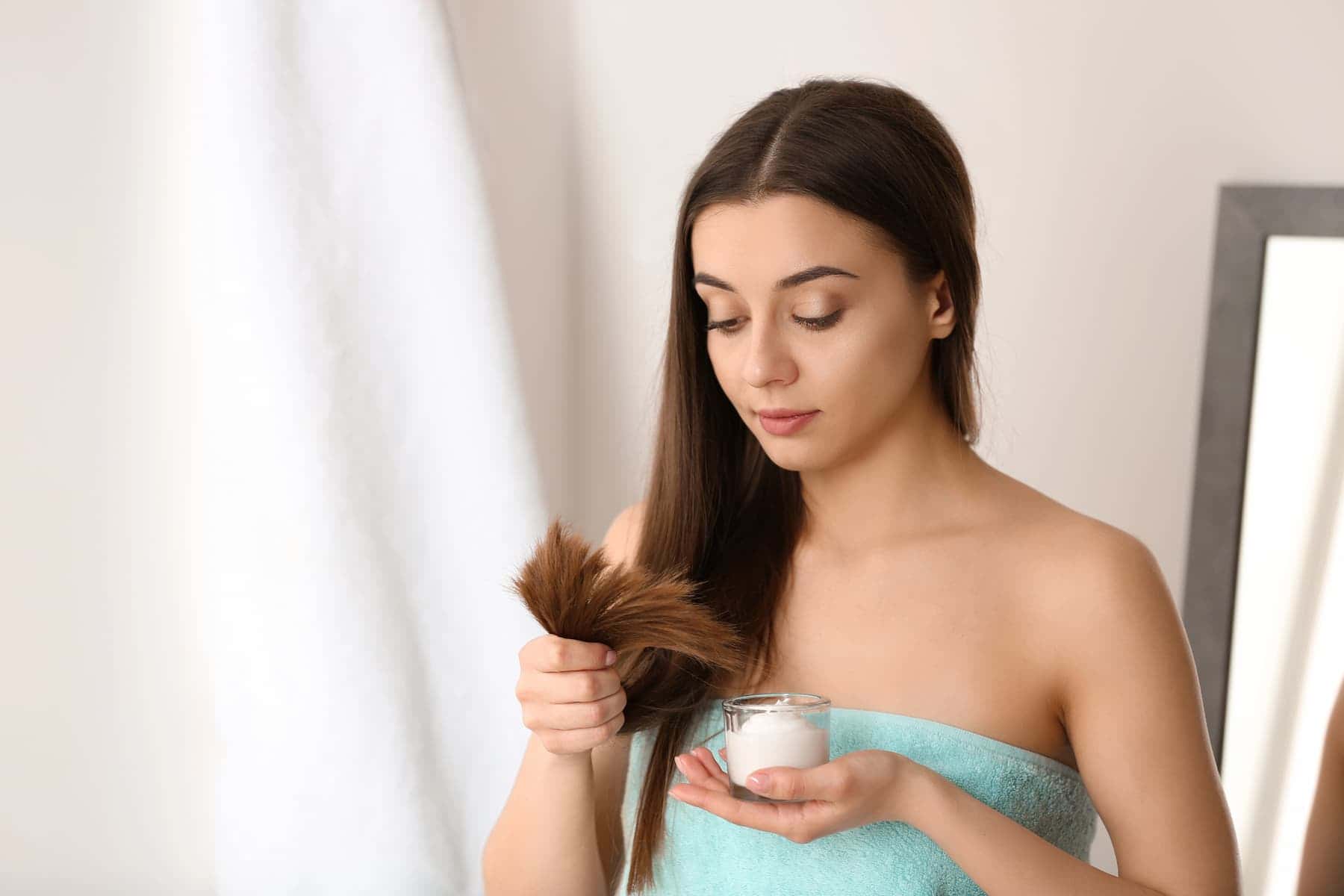
15 Healthy Hair Tips That Actually Make a Difference
When it comes to healthy hair, there’s certainly no shortage of advice.
- One person swears by a particular shampoo.
- Another recommends the latest viral hair mask.
- Someone else insists a certain supplement transformed their hair almost overnight.
The problem is that many healthy hair tips are driven by trends rather than the simple habits that make the biggest difference.
In reality, healthy hair is usually the result of consistent care, gentle routines, and realistic expectations.
You don’t need a complicated routine or a bathroom shelf packed with products to improve your hair’s health. More often than not, it’s the small, consistent changes that have the greatest impact.
If you’re looking for practical, realistic healthy hair tips that can genuinely improve your hair’s condition, you’re in the right place.
This post contains affiliate links, which means we may earn a commission if you purchase through our links—at no extra cost to you. As an Amazon Associate we earn from qualifying purchases. We only recommend products we use or trust. Learn more about affiliate marketing or read our full disclosure.
What Makes Hair Healthy?
Before you dive into the tips, it helps to understand what healthy hair actually looks like.
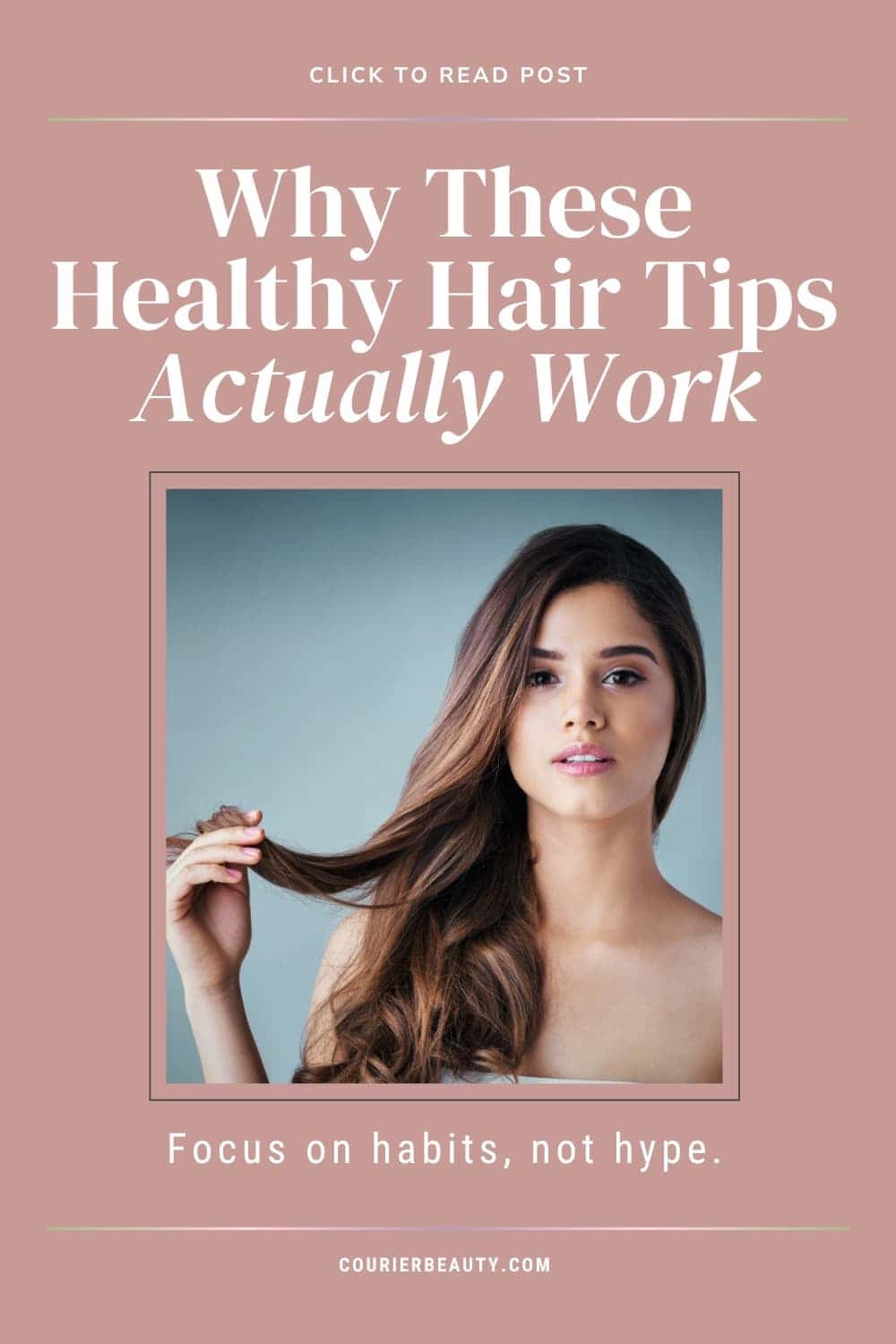
Healthy hair is often characterized by:
- Shine
- Strength
- Smoothness
- Elasticity
- Manageability
- Minimal breakage
Healthy hair doesn’t have to be perfectly straight, thick, or completely free of frizz. The goal is simply to help your hair look and feel its best.
RELATED POST: The Ultimate Guide to Healthy Hair: Everything You Need to Know
With that in mind, here are 15 healthy hair tips that can make a real difference:
1. Focus on Scalp Health
Healthy hair starts with a healthy scalp. While many people spend plenty of time caring for the lengths of their hair, the scalp often gets overlooked.
Your scalp provides the environment where healthy hair growth begins.
Experts say that maintaining a healthy scalp through appropriate cleansing and care helps create the optimal environment for healthy hair growth and overall hair health.
Simple ways to support scalp health include:
- Regular cleansing
- Avoiding excessive buildup
- Using gentle products
- Paying attention to irritation
If you’re looking for a gentle scalp treatment, ACT+ACRE Cold Processed Scalp Detox Oil, available on Amazon, is a popular pre-wash oil that helps nourish the scalp and loosen buildup before cleansing.
Think of your scalp as the foundation of your hair care routine. When you take care of that foundation, healthier-looking hair often follows.
2. Stop Chasing Every Hair Trend
The beauty industry is always introducing something new.
- Hair oils.
- Hair masks.
- Hair tools.
- Viral techniques.
While some trends can be helpful, constantly changing your routine can make it difficult to tell what’s actually working.
Healthy hair usually benefits more from consistency than constant experimentation. Find a routine that works for you, and give it enough time to deliver results.
3. Condition Every Time You Wash
One of the simplest healthy hair tips is also one of the most effective.
Conditioner helps:
- Improve softness
- Reduce friction
- Support manageability
- Minimize tangling
Hair that tangles less is often less likely to break. Over time, reducing breakage can help your hair look healthier overall.
So don’t overlook the importance of conditioning every time you wash.
If you’re looking for a conditioner that supports softer, more manageable hair, Kérastase Genesis Fondant Renforçateur Conditioner, available on Amazon, is a lightweight formula designed to hydrate, detangle, and strengthen the feel of weak or damaged hair without weighing it down.
4. Use Heat Protection
Heat styling can take a toll on your hair over time.
If you regularly use:
- Blow dryers
- Flat irons
- Curling irons
A heat protectant is one of the easiest ways to help support healthier hair.
While it can’t eliminate all potential damage, it can help reduce unnecessary stress caused by heat styling.
If you regularly blow-dry, straighten, or curl your hair, Kérastase Genesis Défense Thermique Blow Dry Primer, available on Amazon, is a lightweight heat protectant designed to help shield hair from heat styling while leaving it feeling smoother, softer, and easier to manage.
Research suggests that repeated exposure to high temperatures weakens the hair fiber, while heat-protective products can reduce, though not completely prevent, heat-related damage.
Small protective habits like this can make a noticeable difference over time.
5. Be Gentle With Wet Hair
Hair is often at its most vulnerable when it’s wet. Brushing too aggressively after washing is a common cause of unnecessary breakage.
Experts say that hair is more fragile when wet, making gentle detangling with a wide-tooth comb and avoiding rough handling important for reducing breakage.
Instead:
- Detangle carefully
- Start from the ends
- Work upward gradually
- Avoid pulling through knots
Taking a little extra time can go a long way toward protecting your hair.
6. Prioritize Hair Health Over Length
It’s easy to focus on growing your hair longer. But healthy hair should always come before long hair.
Long hair that’s heavily damaged often looks less healthy than shorter hair that’s well cared for.
Focus on:
- Strength
- Shine
- Manageability
- Reduced breakage
As your hair becomes healthier, length often follows naturally.
7. Protect Your Hair While Sleeping
Your nighttime routine can have a bigger impact on your hair than you might realize.
Friction from tossing and turning can contribute to:
- Frizz
- Tangling
- Breakage
Many people find it helpful to use:
- Silk pillowcases
- Satin pillowcases
- Silk bonnets
- Loose protective styles
If you’re looking to reduce friction while you sleep, the Slip Pure Silk Pillowcase, available on Amazon, is made from 100% mulberry silk and offers a smooth surface that many people prefer for helping to minimize tangles, frizz, and hair breakage overnight.
Protecting your hair while you sleep is one of the simplest healthy hair tips to add to your routine.
8. Get Enough Protein
Hair is primarily made of a protein called keratin.
While no single food can instantly transform your hair, getting enough protein plays an important role in supporting healthy hair growth and maintenance.
Research suggests that protein and adequate overall nutrition are essential for normal hair growth because the hair follicle is one of the body’s most metabolically active tissues.
Examples of protein-rich foods include:
- Eggs
- Fish
- Chicken
- Greek yogurt
- Beans
- Lentils
The health of your hair often reflects your overall nutrition.
9. Reduce Unnecessary Heat Styling
You don’t have to give up heat styling completely. However, reducing how often you use high-heat tools can help minimize damage over time.
Consider:
- Air drying when possible
- Lower heat settings
- Heatless styling methods
Using less heat often means putting less stress on your hair.
10. Trim Damaged Ends When Needed
Many people avoid trims because they’re focused on growing their hair longer. However, damaged ends can continue to split and break over time.
Trimming your hair won’t make it grow faster. It simply helps keep the ends looking healthier.
Regular trims can go a long way toward maintaining the overall health and appearance of your hair.
11. Avoid Overloading Your Hair With Products
Using more products doesn’t automatically lead to healthier hair.
In fact, using too many products can contribute to:
- Buildup
- Heaviness
- Difficulty identifying what works
The best healthy hair routines are often surprisingly simple. Focus on products that serve a clear purpose instead of feeling like you need to try every new release.
12. Stay Consistent With Your Hair Care Routine
If there’s one healthy hair tip worth remembering, it’s consistency. Many people expect dramatic changes after just a few days.
In reality, improving your hair’s health takes time.
People with the healthiest hair often aren’t doing anything extreme. They’re simply following the basics consistently.
Consistency almost always matters more than perfection.
13. Pay Attention to Your Hair Type
Not every hair care tip works for everyone. Straight, wavy, curly, and coily hair all have different needs.
Experts say that hair care routines should be tailored to your hair type, as different textures have different cleansing, conditioning, and moisturizing needs.
Understanding your hair type can help you:
- Choose products more effectively
- Build a better routine
- Avoid unnecessary frustration
The best routine is one that’s designed for your hair, not someone else’s.
14. Manage Stress
Stress affects your entire body. During periods of ongoing or significant stress, some people may notice changes in hair shedding and overall well-being.
While managing stress isn’t always easy, healthy habits can make a difference.
Examples include:
- Exercise
- Walking
- Journaling
- Meditation
- Spending time outdoors
Looking after your overall well-being can also help support healthier hair.
15. Be Patient With the Process
This may be the most important healthy hair tip of all. Healthy hair rarely happens overnight.
Instead, it develops gradually through:
- Better habits
- Consistent care
- Reduced damage
- Realistic expectations
The healthiest hair journeys are usually measured in months, not days. Give your efforts time to build, and the results are more likely to follow.
Quick Healthy Hair Checklist
If you’d like a simplified version of this article, focus on these essentials:
- Support scalp health
- Condition regularly
- Use heat protection
- Handle wet hair gently
- Protect hair while sleeping
- Eat enough protein
- Reduce unnecessary heat
- Trim damaged ends
- Avoid product overload
- Stay consistent
These simple habits often have a greater impact than a complicated hair care routine.
Healthy Hair Mistakes to Avoid
Along with the tips above, try to avoid these common mistakes.
1. Wearing Tight Hairstyles Too Often
Hairstyles that constantly pull on your hair can place stress on both the hair shaft and the scalp.
Over time, repeated tension may contribute to discomfort, breakage, and thinning around the hairline.
Evidence shows that hairstyles that place prolonged tension on the hair can contribute to traction alopecia and hair breakage, particularly around the hairline.
Giving your hair regular breaks from tight styles can help reduce unnecessary strain.
If you regularly tie your hair back, Slip Large Pure Silk Scrunchies, available on Amazon, are designed to hold your hair more gently than traditional elastic hair ties.
They can be a comfortable option for everyday wear, especially if you’re trying to reduce unnecessary tension on your hair.
2. Using Dirty Hair Tools
Hair brushes, combs, and styling tools can collect oil, product residue, and debris over time.
If they aren’t cleaned regularly, that buildup can be transferred back onto your hair and scalp.
Cleaning your tools regularly is a simple habit that helps keep them working effectively.
3. Brushing More Than Necessary
Many people assume that brushing more often automatically leads to healthier hair.
In reality, excessive brushing can create friction and contribute to breakage, especially if your hair is already fragile. Gentle brushing when needed is usually all that’s necessary.
4. Spending Too Much Time in Direct Sun Exposure
Just as your skin can be affected by UV exposure, your hair can also become dry and stressed after spending long periods in the sun.
Research suggests that ultraviolet (UV) radiation can damage the hair cuticle and proteins, leading to dryness, reduced strength, and changes in appearance over time.
This is especially common during the summer or after frequent outdoor activities. Protecting your hair when you’ll be outside for extended periods may help keep it in better condition.
5. Forgetting That Overall Health Matters
Your hair doesn’t exist in isolation from the rest of your body. Factors such as sleep quality, hydration, nutrition, and overall well-being can all influence how your hair looks and feels.
Sometimes, improving your hair health starts with taking better care of your overall health.
RELATED POST: 15 Mistakes Preventing You From Growing Long Healthy Hair
What Matters Most When It Comes to Healthy Hair?
If all the hair advice online starts to feel overwhelming, remember this:
Healthy hair is usually built on the fundamentals.
Not miracle products.
Not complicated routines.
Not viral hacks.
The habits that matter most are often simple:
- Gentle handling
- Consistent conditioning
- Heat protection
- Scalp care
- Good nutrition
- Patience
Focus on mastering these basics first. Everything else becomes much easier.
Final Thoughts
The best healthy hair tips aren’t always the most exciting. They’re the everyday habits that gradually improve your hair over time.
- Supporting scalp health.
- Conditioning consistently.
- Protecting your hair from damage.
- Eating well.
- Managing stress.
- Being patient.
On their own, these habits may seem simple, but together they create a strong foundation for healthier hair.
Remember, healthy hair isn’t about perfection. It’s about consistency. Small improvements, repeated over time, often lead to the most noticeable results.
Because the healthiest hair usually isn’t the result of a single product or treatment.
It’s the result of habits that truly make a difference.
*This article is for informational purposes only and should not be considered medical or dermatological advice. Always consult with a dermatologist or qualified skincare professional for personalized recommendations tailored to your skin type and concerns.

Malin, co-founder of Courier Beauty, has a BA in Fashion Marketing and a PG certificate in Fashion & Luxury Goods Management. She’s passionate about skin health through nutrition and creates content focused on radiant skin and holistic wellness.